
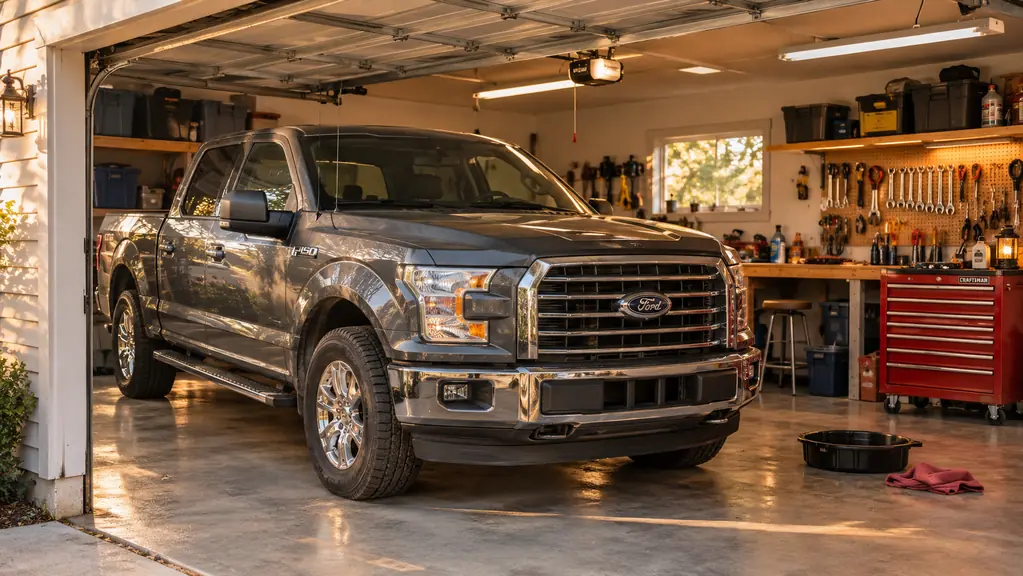
I learned oil changes the way my dad taught them. Ramps or a jack and stands, a wrench on the drain plug, a pan underneath, and a forearm that came back slick to the elbow. It works. It also eats an afternoon, and on the Tacoma it means lifting the front end before anything else happens. The EWK 6.5L oil extractor does the same job through the dipstick tube with the truck sitting flat on the garage floor. I have run it through several changes now on both vehicles, and it has earned the shelf space it takes up.
Here is what the EWK extractor actually is, without the marketing language. A tank, a pump, and a set of tubes. You either pump it by hand or plug in shop air and let pressure do the work. That is the whole machine. What follows are ten reasons it has not gone back into the corner of the garage.
Skip the ramps. Pull the dipstick instead.
The EWK 6.5L extractor runs in manual or pneumatic mode and pulls oil straight through the dipstick tube, so nothing has to come off the ground.
Amazon Check Today's Price on Amazon →No ramps, no jack stands, no crawling under the truck
The old way meant getting the front end up in the air, then reaching under with a wrench and a drain pan that always sat two inches off center. The EWK extractor changes the geometry of the job. The truck stays flat on all four tires on the sealed concrete and I work standing up with the hood open. Nothing is holding two tons of pickup above my chest while I fumble for a plug. That alone justifies the shelf space.
Two ways to drive it: shop air at 40 to 170 PSI, or your own arm
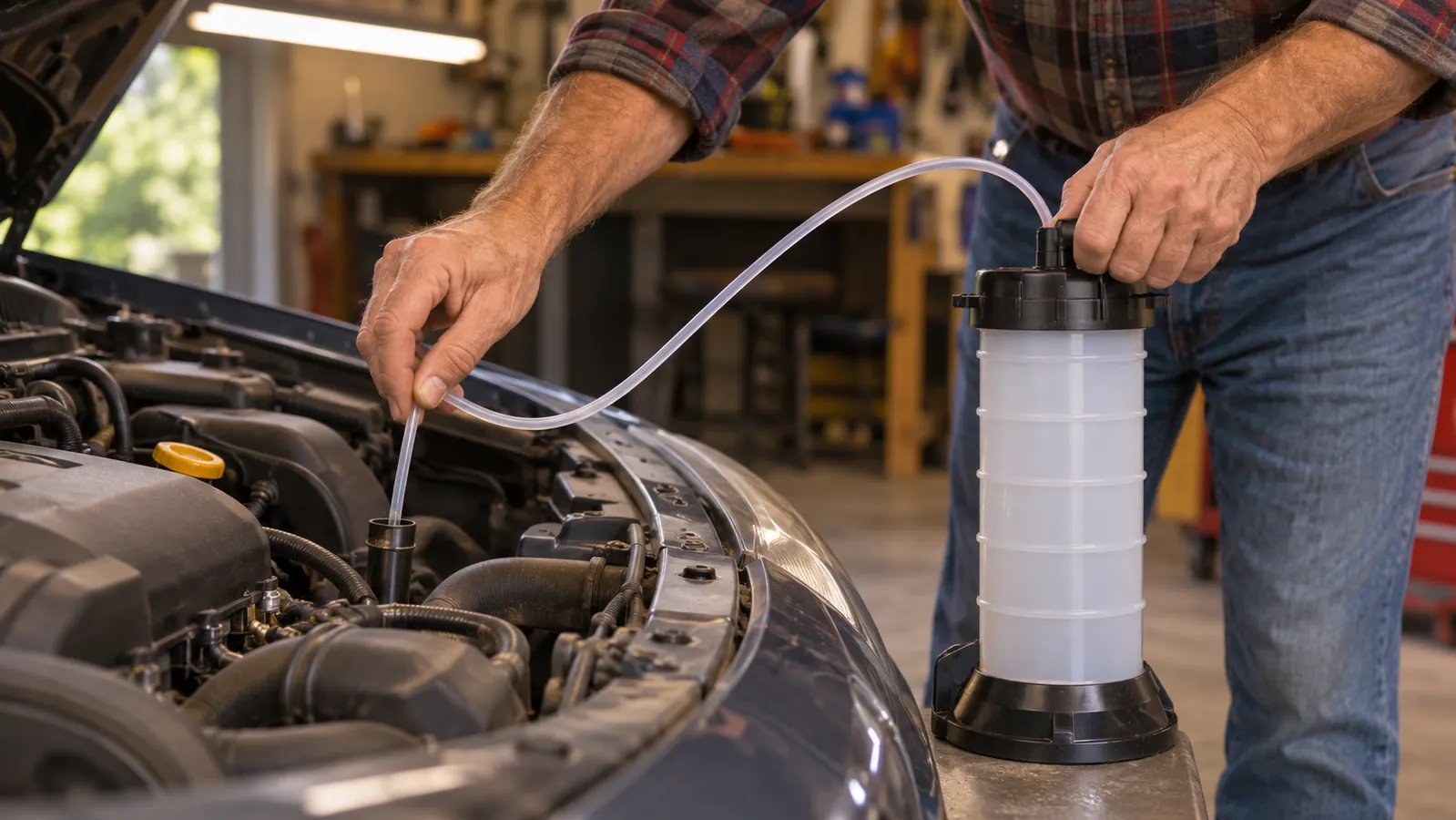
Pneumatic mode is the fast one. You plug in shop air, keep the regulator inside the 40 to 170 PSI operating range, and it pulls while you hold the tube seated. Manual mode is what I use more often, because my compressor lives at my dad's place and hauling it over is more work than the oil change itself. Pumping by hand is slower, but it is quiet, and it works in a driveway with no air line anywhere in sight.
Two extended suction tubes reach the last of the old oil
The listing says two extended suction tubes reach deep into the reservoir, and that matches what I found. The thin tube goes down the dipstick opening and you feed it until it stops, then keep feeding a little more as the level drops. On the Tacoma I got to the bottom of the pan without the angle-guessing I expected. When the flow turns to a sputter, you are done.
Used oil goes into a closed tank, not onto the driveway
A drain plug dumps several quarts in about four seconds, straight down, and if the pan is not centered or the wind picks up, some of it lands where you do not want it. Extracting through the dipstick keeps the oil in a closed path until it is inside the tank. My garage floor is still clean. That sounds like a small thing until you have spent twenty minutes on your knees with cat litter.
One person can finish the job without a spotter
A drain plug oil change under the truck takes two people or a lot of up and down. One person holds the pan, one works the wrench. With the extractor I start it, step back, and come back to check the flow. There is no moment where hot oil is moving and nobody is watching it. I check the tube, glance at the tank, and keep going.
The truck never left the ground. Two tons stayed on all four tires while the oil came out through the dipstick tube.
6.42 pounds, so it comes off the workbench with one hand
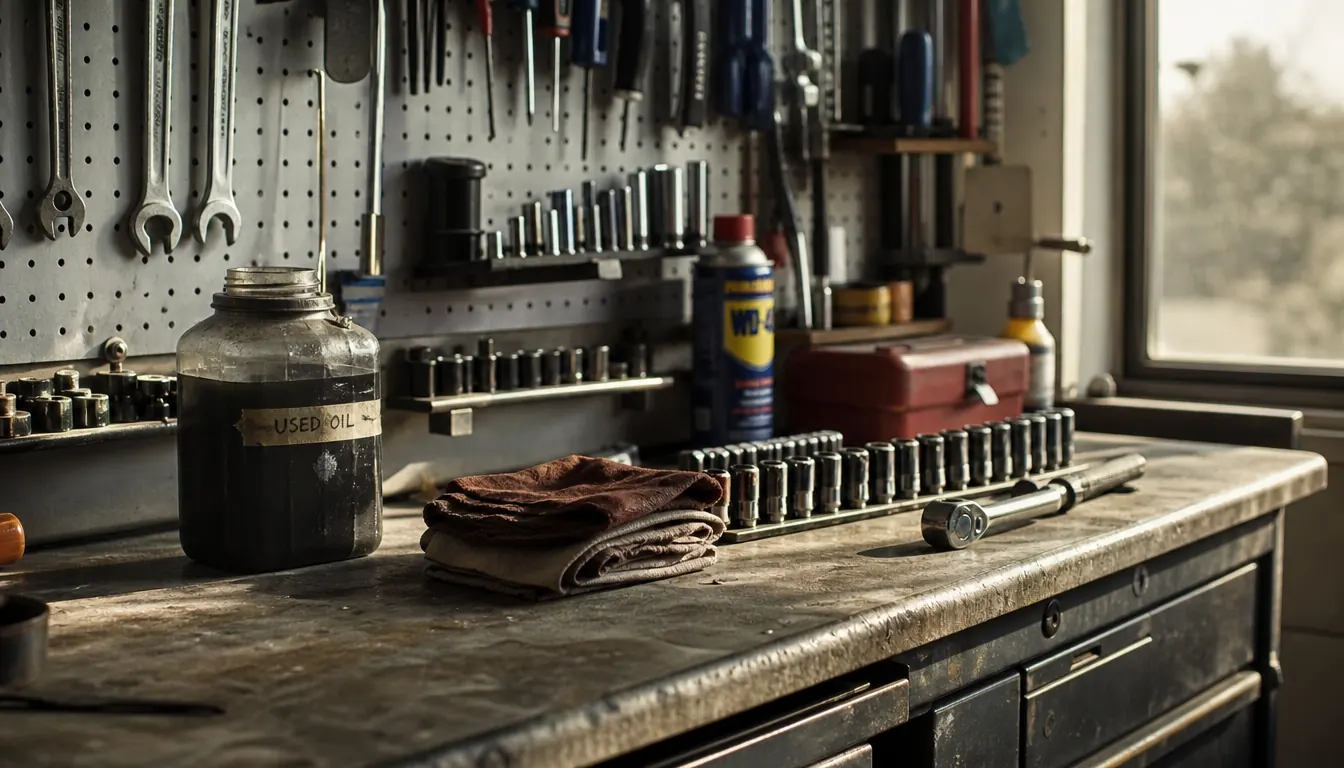
It weighs 6.42 pounds and measures 8.27 by 8.27 by 22.05 inches, which means it stands upright against the wall without taking over the bench. That matters more than it sounds. The tools that actually get used are the ones that are easy to grab. Anything that needs two hands and a cleared path tends to get skipped on a Tuesday night when you just want the job done.
It handled a 168,000-mile pickup and a 1991 weekend car
The Tacoma at about 168,000 miles takes what the manual calls for, and the tank swallowed it with room left over. The Miata takes less, so there is even more margin. Two very different engines, one tool, no second guess about whether it is sized for the car in front of me. That kind of flexibility is why it stays out instead of getting buried.
No drain plug, so no crush washer and no stripped threads
The drain plug on a 1991 oil pan is not something I want to touch more often than I have to. Every removal is another chance to cross-thread it or crush a washer that is not quite right. Working from the top skips all of that. I still pull the plug once a year to look at what comes out and check for anything unusual, and that feels like the right balance for a car this old.
6.5 liters covers a normal four-cylinder or V6 change with room to spare
Six point five liters is roughly six point nine quarts, which clears most of what your neighbors are driving. The one thing to check is your own capacity before you start, because a big V8 with a deep pan can run past it. If you are not sure, extract what the tank holds, empty it, and finish the job. That is a two-minute inconvenience, not a reason to skip the tool.
The tool a neighbor borrows once and then buys for himself
I lent mine out on a Saturday. It came back clean and he ordered one the following week. That is the pattern with the EWK extractor. It is not exciting to look at and it does not make any noise you would call impressive. It just turns a job you dread into a job you finish in the time it takes to drink a cup of coffee.
What I'd Skip
Skip the cheap transfer pumps that look similar. The ones with a thin hose and a light body tend to collapse under suction, take forever to move a few quarts, and you end up fighting the tool instead of using it. Skip the idea that the EWK extractor works on everything, because the listing specifically calls out the Mercedes W212 E350 and C218 CLS 350 as not compatible, and I would take that at face value. Never run gasoline or any highly volatile fluid through it, no matter how convenient it seems. And skip the notion that this replaces the drain plug forever. I still pull the plug once a year to see what comes out. The extractor makes the other changes easy, and that is the whole point.
The oil change you will actually do on a Tuesday night
Manual or pneumatic, 6.5 liters of capacity, and the truck stays on the ground. This is the tool that comes off the workbench with one hand instead of getting skipped.
Amazon Check Today's Price on Amazon →