
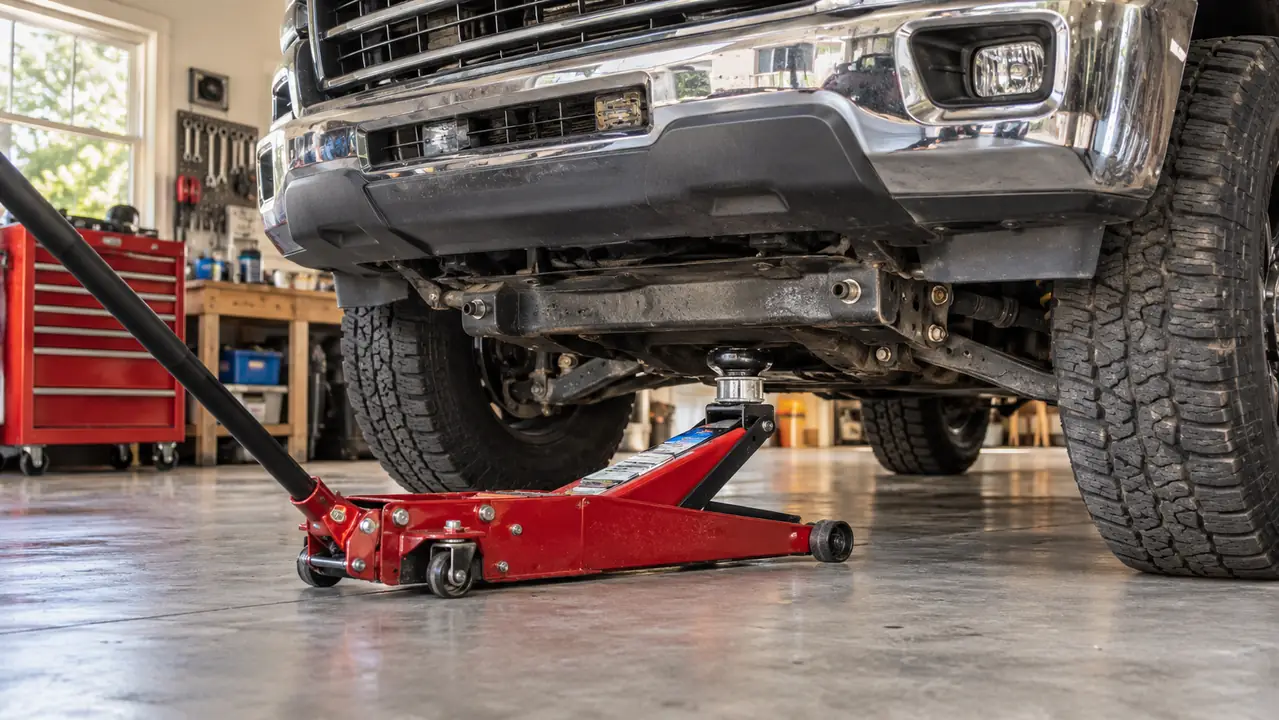
The first time I tried to lift my 1991 Miata with a borrowed steel jack, I quit before the saddle ever touched the frame. The car sits low enough that the body of the jack stopped against the rocker panel and that was the end of the experiment. I put the wheels back on and drove to the parts store feeling like a guy who had been sold the wrong tool. That afternoon is when I stopped shopping for floor jacks by capacity and started shopping by dimensions.
Years later the ARCAN 3-Ton Aluminum Low Profile Floor Jack, model A20019, lives against the wall of my Sacramento garage. It lifts my 2012 Toyota Tacoma on oil change weekends and it slides under the Miata without a fight. I am not a professional mechanic. I am a 52 year old county water department supervisor who learned brakes and oil changes from his dad and never stopped. These are the ten reasons the jack stayed, written for anyone standing in a store aisle trying to work out what actually matters.
The jack that fits under the low car and still picks up the truck
ARCAN model A20019. 6,000 lb capacity, 3.75 in. minimum height, 18 in. maximum lift, 56 pounds of aluminum.
Amazon Check Today's Price on Amazon →Six thousand pounds of capacity covers everything in my driveway
Three tons works out to 6,000 pounds, and ARCAN lists that against passenger cars, SUVs and light trucks. The Tacoma is the heavy end of that range. The Miata is nowhere near it. What I care about is the headroom. A jack working near its limit every single time is a jack you are asking a lot of, and you feel it in the pump handle. This one has margin left over, so I am not second-guessing the rating while I am flat on my back under a frame rail.
The 3.75 inch minimum height is the whole reason it works on a low car
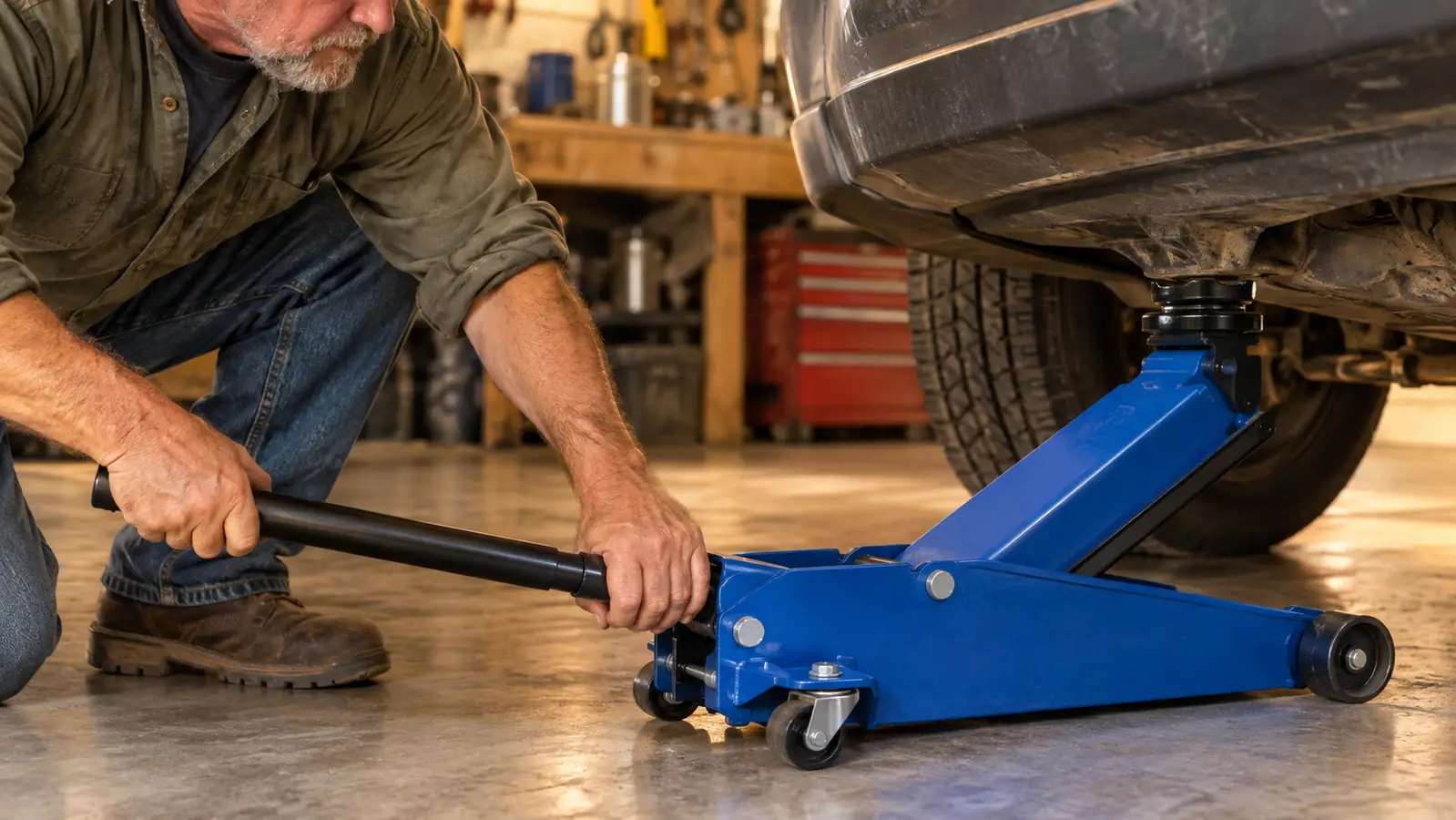
Low profile gets used loosely in listings, so here is the number that settles it. ARCAN lists a minimum height of 3.75 inches. My Miata is low enough that a taller jack body jams against the rocker before the saddle reaches anything useful. This one slides in with room to line the saddle up on the crossmember. If you own anything lowered, or a car with a deep front lip, read that number before you read the capacity. It decides more than the tonnage does.
Eighteen inches of lift is enough to place stands where they belong
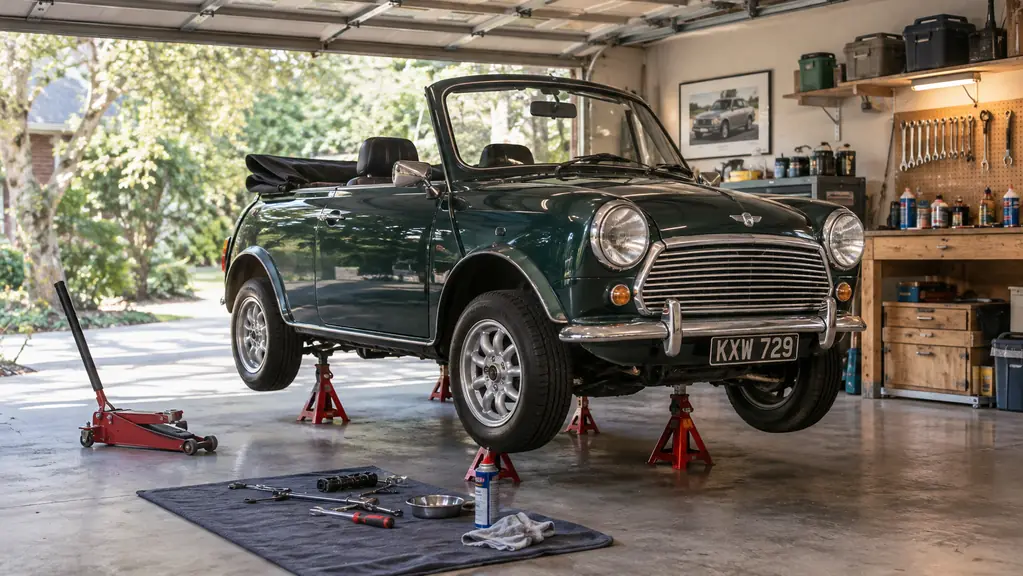
A jack is not a lift. Its job is to get the vehicle up so you can put stands under it at the right notch, then get out of the way. Eighteen inches of maximum lifting height means the truck frame clears enough for my stands to sit where they are supposed to instead of on the first click. On the Miata I am nowhere near the top of the travel, which is exactly how I want it. Running a jack to full extension every time is a habit I dropped years ago.
Fifty-six pounds is light enough that I actually put it away
Aluminum is why it weighs 56 pounds. That sounds like a small detail until you are moving a jack around a one-and-a-half-car garage at the end of a long Saturday. Heavy tools get left where they were used because moving them is a chore, and a jack left in the middle of the floor is a jack you trip over in the dark. Mine goes back against the wall beside the workbench, and it goes back every time, because it is easy enough that I have no excuse.
The reinforced lift arm holds the load steady on the way up
ARCAN describes a reinforced lift arm with torsion control. In plain language, the arm resists twisting when one side of the load is heavier than the other. I notice it most lifting one corner of the Tacoma, where the frame rail is not perfectly level and the truck wants to lean as it comes up. The saddle stays flat against the lift point the whole way. That is the difference between a controlled raise and one where you keep flinching and checking your hand placement.
Bypass and overload valves are the safety hardware you never see
The hydraulic side includes bypass and overload valves. The listing says they prevent over-extension and keep operation controlled. Translation for the rest of us: if I keep pumping past the top, the jack does not blow a seal and drop the vehicle on me. And when I open the release, the load comes down at a rate I control instead of all at once. Nobody brags about valves. They are the reason the thing still behaves after a lot of Saturdays on a cold floor.
At 30 by 13.5 by 8 inches it stores against the wall, not in the walking path
The footprint matters as much as the weight in a garage my size. Thirty inches long, 13.5 wide, 8 tall. It tucks under the front edge of the workbench and leaves the path between the tool chest and the car clear. In a one-and-a-half-car garage the floor is the scarce resource. Anything that has to live in the middle of it gets resented fast, and resented tools get moved to the shed and forgotten. This one has a home, which is why it gets used.
The handle is in the box, so there is no second trip
The included components list is short: the floor jack and the handle. That is all I needed to get started. I assembled the handle, then ran the jack up and down a few times unloaded before it ever went under a vehicle. That no-load pass is a habit I picked up from my dad and it is a good one, because it tells you whether the release is behaving before you trust it with 6,000 pounds. Mine has needed nothing since except an occasional wipe down.
A one year warranty and a model number I can actually look up
The warranty is one year, which is not forever, and I would rather tell you that straight. What I like is that there is a specific model number, A20019, printed on the documentation. When something goes wrong with a tool, being able to search a model number and pull up the right parts information is worth more than a vague promise with nothing behind it. I keep the receipt folded into the manual in the top drawer of the tool chest, because that receipt is the first thing anyone will ask for.
One jack covers two very different vehicles
This is the reason I stopped talking myself into a two jack setup. A low profile jack for the Miata plus a bigger one for the Tacoma would eat twice the floor space, and I would still be dragging two of them around. The ARCAN goes from 3.75 inches at the bottom to 18 inches at the top of a 6,000 pound range. That covers a small convertible, a mid-size pickup, and whatever a neighbor rolls over and asks about on a Sunday afternoon.
What I'd Skip
I would skip buying any jack on capacity alone. A 3 ton rating tells you nothing about whether the thing will fit under your car, and a jack that does not fit is a jack you never use. I would also skip this one entirely if you do not own jack stands, because the jack lifts and the stands hold, and those are two separate jobs that should never be done by the same piece of equipment. Be honest about the 56 pounds too. If lifting that off the floor is a strain on your back, a lighter jack will not fix it and a heavier steel one will make it worse. The one real limit here is height. At 18 inches of maximum lift, this is not the tool for a truck with a serious suspension lift. It is a passenger car, SUV and light truck jack, and ARCAN lists it that way. For everything parked in my garage, that ceiling is exactly right.
3.75 inches of minimum height is what decides whether a jack gets used or gets shoved into the corner of the garage.
One jack, two vehicles, and a floor you can still walk across
ARCAN 3-Ton Aluminum Low Profile Floor Jack, model A20019. 6,000 lb capacity, 3.75 in. to 18 in. of lift, 56 pounds, one year warranty.
Amazon Check Today's Price on Amazon →