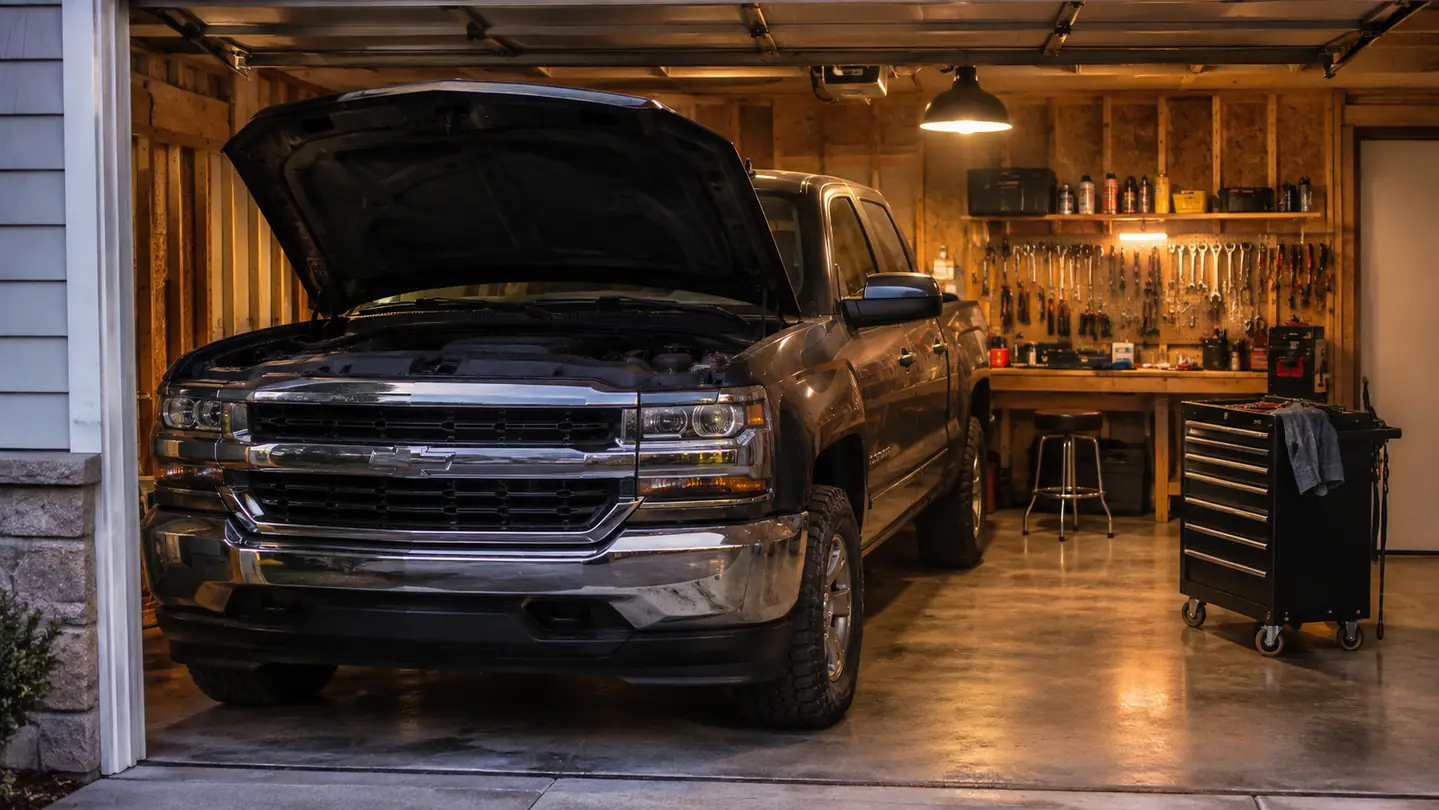
The light came on somewhere around exit 12 on Interstate 80, steady amber, no flashing, and I spent the next three miles telling myself it was probably nothing. My pickup had 168,000 miles on it. A warning light on a truck that old feels less like an emergency and more like an envelope you are not ready to open.
Here is the mistake I made the first time it happened. I drove to a parts store, let a counter guy read the code for free, and spent a Saturday replacing a sensor that turned out to be perfectly fine. The code pointed at the symptom. The cause was a cracked vacuum line three inches away. That is why there is a BlueDriver OBD2 Scanner in my toolbox now, and why it gets used on the truck far more often than on the 1991 Miata project car.
What follows is the process I run now, in order, from the moment the light comes on to the moment I clear it and confirm the fix. It takes about fifteen minutes to get real information out of the vehicle, and it has kept me from guessing at least a dozen times.
Read the Code Before You Buy a Single Part
The BlueDriver OBD2 Scanner plugs into the port under your dash and connects over Bluetooth to the app on iOS or Android. It reads and clears codes, shows live data and freeze frames, and there is no subscription.
Amazon See the Scanner on Amazon →What the Check Engine Light Is Actually Telling You
A steady check engine light means the engine computer stored a diagnostic trouble code. That is the whole message. It is a note the computer left for itself, sitting in memory, waiting for somebody to read it. A flashing light is a different animal, and I will come back to it at the end, because it is the one version of this that means stop driving now.
The code is a short tag, something like P0171 or P0302. The P stands for powertrain. The digits narrow down a system and a fault. What the code does not do is name the part you should buy. P0171 means the engine is running lean on bank one. That could be a vacuum leak, a dirty mass air flow sensor, a weak fuel pump, or an exhaust leak ahead of the oxygen sensor. Four very different repairs and one code.
So the tool matters less than what you do with the data behind the code. Reading the number is the easy part. The BlueDriver app is where the rest of it lives, and that is where the diagnosis actually happens.
Every code I have chased falls into one of two buckets. Either something is not getting what it needs, air, fuel, or spark, or something is getting more of it than it should. Once you frame it that way, the data stops being trivia and starts being evidence. The scanner hands you the numbers. You supply the reasoning.
Step 1: Find the OBDII Port and Plug In the Scanner
The OBDII port is a trapezoid shaped connector, and on gas vehicles sold in the United States from 1996 onward it has to sit within reach of the driver seat. On my pickup it hangs under the dash just left of the steering column, pointing down. On the Miata it is tucked up under the driver side dash and you find it by feel more than by sight.
If you cannot locate it, the owner manual will tell you. Do not force the plug. It only fits one way and it seats with a distinct click. I used to plug in with the engine running. Now I turn the key to on, plug in, and then let the tool boot. It is easier on the connector and it gives the scanner a clean start.
Worth knowing: the port is powered by the vehicle, so the scanner needs the key at least in the on position before it will do anything. If the app shows nothing at all, check the key before you decide the tool is broken. That one has caught me twice.
Because it connects over Bluetooth, there is no cable stretched across your lap while you drive. That sounds minor until you have tried to hold a code reader, a phone, and a steering wheel at the same time on a road test.
One more habit worth building: pull the scanner when you are done working. It draws power from the vehicle, and a short session will not bother a healthy battery, but I have seen a battery go flat after a tool sat in a car overnight with the key left on. Unplug it, cap the port, close the hood.
Step 2: Pair the Scanner and Set Up Your Vehicle in the App
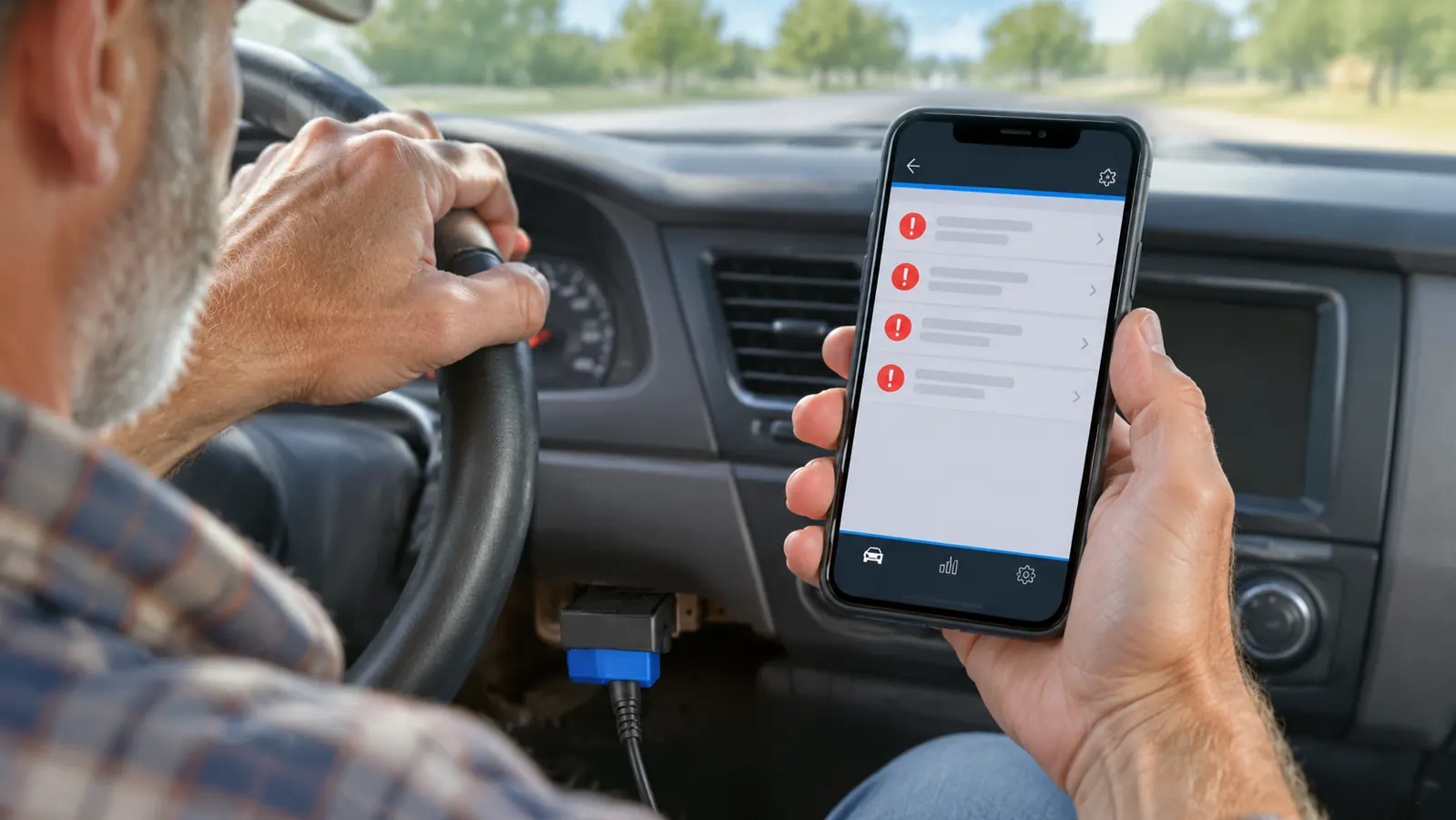
Install the BlueDriver app on iOS or Android, open it, and work through the pairing steps with the key on or the engine running. The phone finds the scanner and they connect. Mine takes a few seconds, though the first pairing took longer while the phone sorted itself out.
Then tell the app what it is talking to. Year, make, model, engine. This is not busywork. The same code can mean slightly different things across engines and model years, and the tool uses that information to label the data correctly. My truck is a 2012 Tacoma with the V6. The Miata is a 1991, which is older than the 1996 cutoff for OBDII, so that car never sees the scanner at all. It gets a timing light and a lot of patience instead.
Before you go further, confirm the app is showing live numbers. If everything sits at zero with the engine running, you have a connection problem, not an engine problem. Fix that first.
Step 3: Read the Codes and Write Them Down Before You Touch Anything
Run the scan. You will see stored codes, pending codes, and permanent codes. Stored codes are the ones that turned the light on. Pending codes are faults the computer noticed but has not confirmed over two drive cycles. Permanent codes are set when the light comes on and only clear themselves after enough clean drive cycles, which is why a light you cleared can still fail an emissions test.
Write the codes down. On paper, or a photo of the screen, I do not care which. I started doing it after I cleared a P0302 on the truck, forgot what it was, and had to wait two months for it to come back so I could remember. It came back on a Tuesday, on the on ramp, at exactly the wrong moment.
Then read the description and stop before you order anything. A misfire code on cylinder two is not an instruction to buy a coil for cylinder two. It is a report that cylinder two is not pulling its weight. Swap the coil to another cylinder and rescan. If the code follows the coil, you have your answer for the price of a gasket. If it stays on cylinder two, you have a different problem and you just saved yourself a part.
A misfire code on cylinder two is not an order to buy a coil. It is a report that one cylinder is not pulling its weight.
Step 4: Pull the Freeze Frame and Live Data So You Are Not Guessing
This is the step almost nobody does with a cheap code reader, and it is the step that turns a number into a diagnosis. A freeze frame is a snapshot of the engine at the instant the fault set. RPM, engine load, coolant temperature, fuel trims, vehicle speed. All of it captured in the second the computer decided something was wrong.
A real example from my truck. A lean code that only set at idle and never at highway speed sent me looking for a vacuum leak rather than a fuel pump. The freeze frame showed low rpm and low load. If the same code had set at 2,500 rpm under load, I would have gone after fuel delivery first. Same code, opposite direction, and the difference was one screen of data.
Live data is the other half of it. Watch the fuel trims while the engine idles and while you blip the throttle. Short term trim wandering a few percent either way is normal. Long term trim climbing into the teens and parking there means the computer is adding fuel to cover for something, and that something is usually air getting in where it does not belong.
Mode 6 is worth a look while you are in there. It shows the results of the computer internal tests, including misfire counts per cylinder. That is how I caught a coil going bad on the truck before the light ever came on. Smog readiness sits on the same screen, and if your state tests emissions, checking it before you drive to the station will save you a wasted morning in line.
Two codes at once can tempt you to chase them separately. Resist that. If a lean code and a misfire show up together, the lean condition is probably causing the misfire, and replacing the misfire part first just burns money. Read them as one story about one engine.
Step 5: Fix It, Clear the Codes, and Drive the Cycle
Fix the actual problem first. Clearing a code fixes nothing. It erases the note. The light comes back, usually at the worst possible time, and any permanent code stays behind anyway. I have cleared a light and felt better for about four days.
When the repair is done, clear the codes from the app and drive a full cycle. Cold start. A stretch of steady highway speed. Some stop and go. Enough time for the computer to run its monitors. On the truck that is about twenty minutes of mixed driving. A few monitors want specific conditions, like a steady 55 with the tank somewhere in the middle.
Then rescan. No codes and monitors complete means you are done. A code that came back is information, not failure. Look at the freeze frame again and compare. If it set under different conditions than before, the car is telling you something new and you should follow it.
One safety note before the wrap up, and it is the important one. If the check engine light is flashing rather than steady, pull over and shut it down. A flashing light means a misfire severe enough to push raw fuel into the catalytic converter, and that can cook a converter in minutes. No scan reading, no diagnosis, no appointment on your calendar is worth that.
What Else Helps
Keep a log. A notebook in the garage or a note on your phone, with date, mileage, code, and what you did about it. Patterns live in that log that you will never remember otherwise. Mine showed a lean code that only appeared in January, which turned out to be intake gaskets that sealed fine once the engine bay was warm.
Know where your limits are. Reading codes and swapping a coil in the driveway is well within reach for most people. Chasing an intermittent wiring fault through a harness is a different job, and an hour of diagnosis at a good independent shop is money well spent compared with a parts cannon. I have fired the parts cannon. It is not a strategy.
And check the cheap stuff before you trust any code too far. A loose gas cap will set an evaporative emissions code every single time. A cracked intake tube between the air box and the throttle body will set a lean code and costs nothing to look at. I once spent an afternoon on fuel trims that turned out to be a hose clamp I forgot to tighten after a filter change.
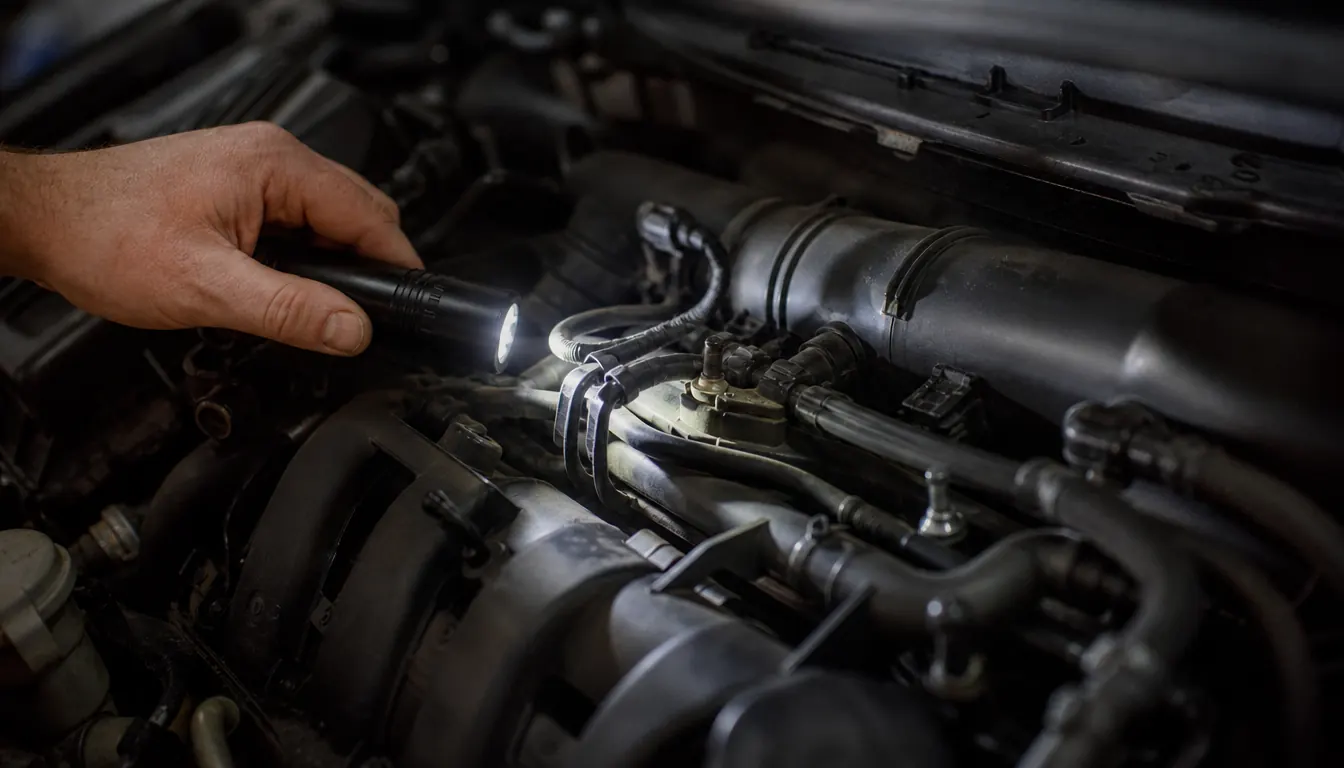
Keep a cheap flashlight and a set of picks next to the scanner. Half the vacuum leaks I have found were visible only with a light held at the right angle, and half the connectors I have fought were released with a pick instead of a screwdriver. The scan tells you where to look. The light lets you actually see it.
The Code Is a Starting Point. The Data Is the Diagnosis.
The BlueDriver OBD2 Scanner reads and clears codes and shows freeze frames, live data, Mode 6 results, and smog readiness on your phone over Bluetooth. It works on gas vehicles from 1996 on, needs no subscription, and comes with a 180 day money back guarantee.
Amazon Check Today's Price on Amazon →