Short answer first: if the check engine light is on and you intend to fix the thing yourself, the BlueDriver OBD2 Scanner is the one I keep in the truck. If you only want to know what the light means before you hand the vehicle to somebody else, a plain handheld reader like the Ancel AD310 answers that question with less fuss. Two different jobs, and the argument between these two tools is really about which job you actually have.
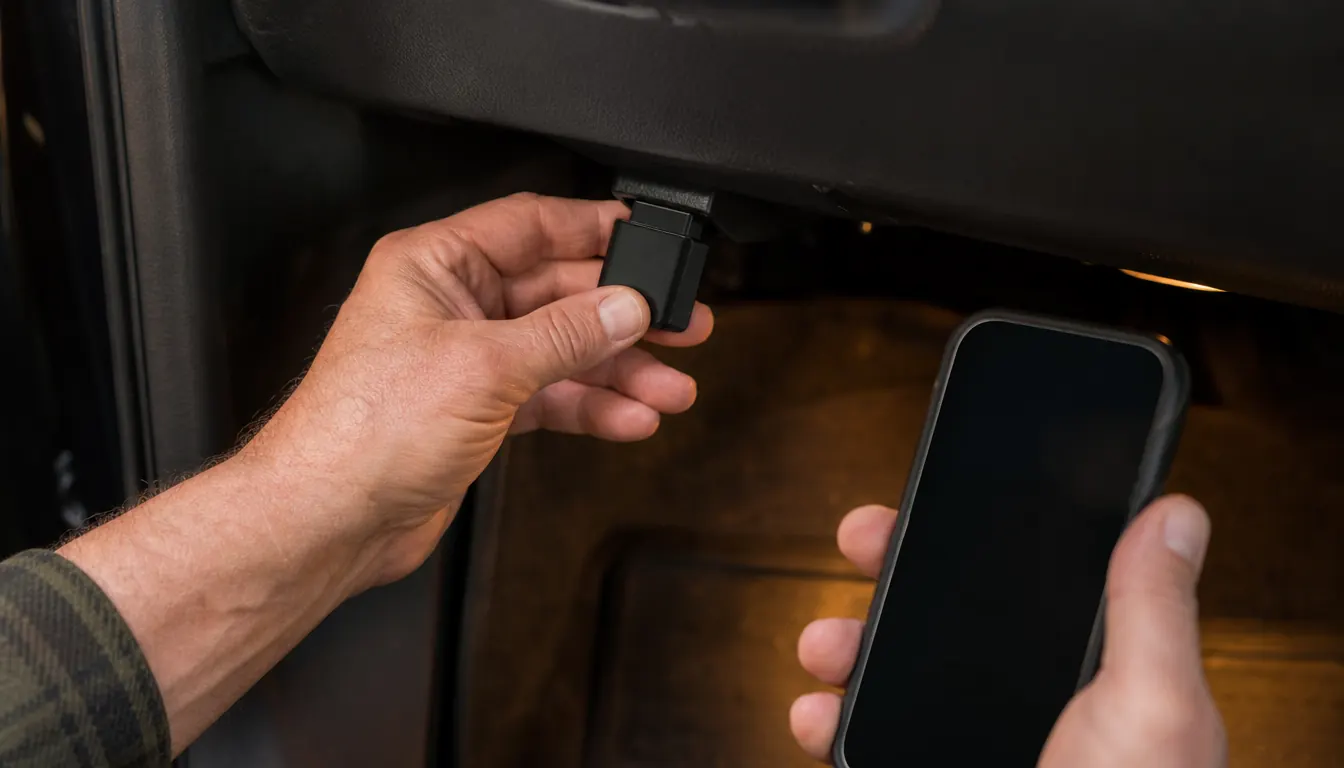
Here is the split in plain terms. The Ancel AD310 is self-contained: a screen, a keypad, a cable, and the code definitions built in. Plug it into the port under the dash, press a button, read the number, look it up, unplug it. It never asks your phone for anything. The BlueDriver is a small Bluetooth adapter that goes into that same port and does its work through an app on iOS or Android. You give up the self-contained feel. What you get back is live vehicle data as you drive, freeze frames, smog readiness checks, Mode 6 test results, and coverage for ABS, SRS and TPMS codes instead of engine codes alone.
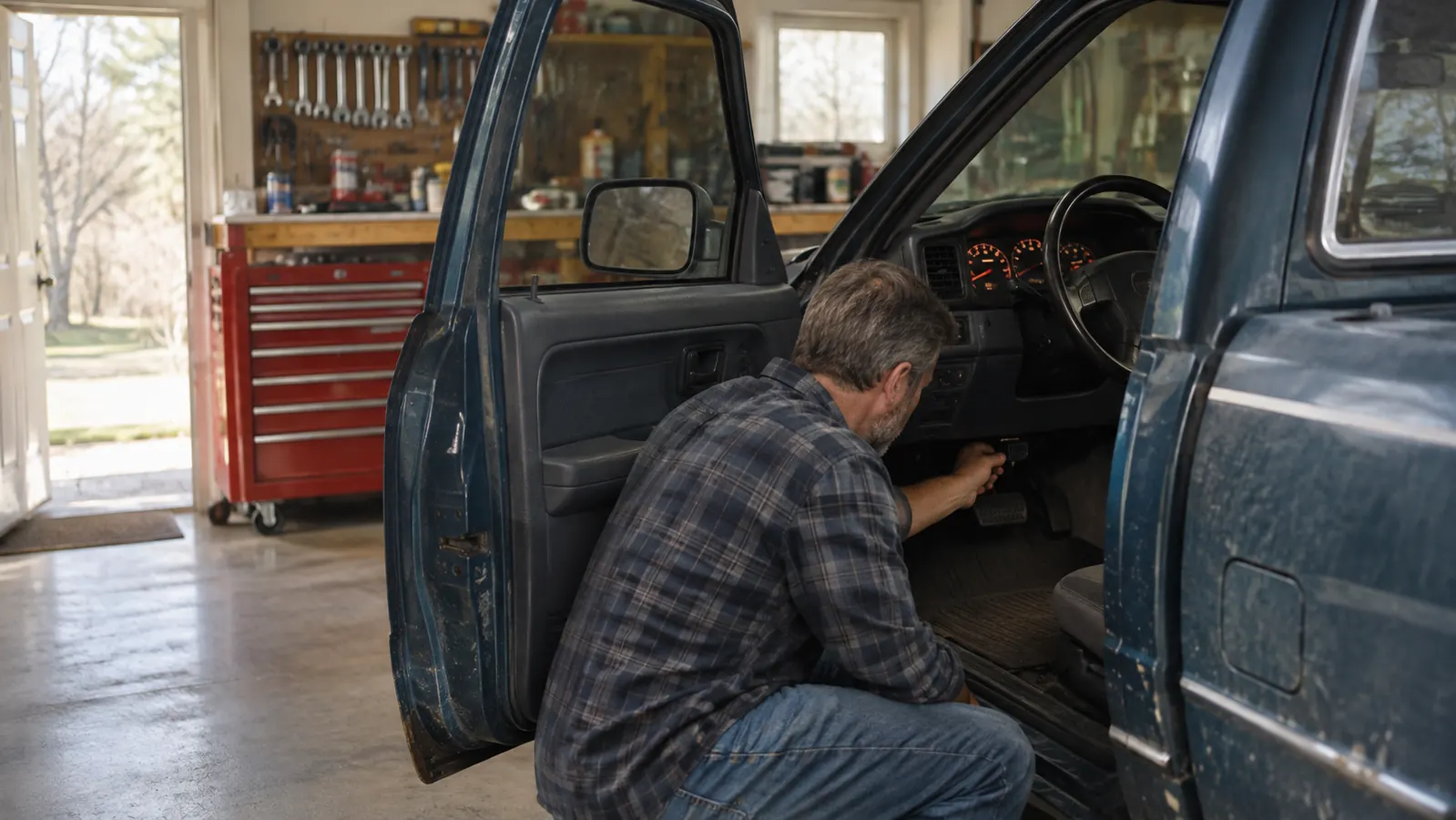
I'm Curtis. I'm 52, I supervise a county water crew in Sacramento, and I work out of a one-and-a-half-car garage on a 2012 Toyota Tacoma with about 168,000 miles on it plus a 1991 Miata that is more of a long conversation than a car. My dad taught me brakes and oil changes in his driveway. The lesson that stuck was not any particular procedure. It was that guessing costs more than testing.
| BlueDriver OBD2 Scanner | Ancel AD310 | |
|---|---|---|
| Reading and clearing engine codes | Reads and clears more codes than a basic reader, with the definition shown in the app | Reads and clears standard engine codes and shows the definition on its own screen |
| Live data you can graph | Streams live vehicle data as you drive, so you can see the behavior behind the code | Not what the handheld is built for; you get the code and the definition and move on |
| Freeze frames and Mode 6 | Shows saved freeze frames and Mode 6 test results | Readiness monitors only, no Mode 6 test results |
| ABS, SRS and TPMS codes | Reads those systems, not just the engine computer | Engine codes only |
| Works with no phone | Needs the app on iOS or Android for everything it does | Self-contained, nothing to pair, nothing to install |
| Time from box to first code | Pair the adapter, open the app, connect, then read | Plug in, press a button, read the screen |
| Vehicle coverage | Gas vehicles 1996 and newer, plus select light-duty trucks | Any OBD2-compliant vehicle from 1996 on |
| Best for | Tracking down a problem you plan to fix yourself | Finding out what the light means and getting on with your week |
How I Compared Them
I ran both tools on the same two vehicles and judged them on one thing only: how much shorter they made the trip from 'something is wrong' to 'here is the part I need to test.' Nothing scientific about it. Same port, same faults where I could manage to create them twice, and a notepad on the workbench. Where I could not reproduce a fault on demand, I compared the two on what they showed me about a vehicle that was running fine, because that is most of the time you spend with a scanner anyway.
The distance question matters more than the spec sheet suggests. A code tells you the computer noticed something. It rarely tells you what the engine was doing at the moment it noticed, and that is usually where the answer lives. If a scanner leaves you holding a number and a search engine, it has done half the job and handed you the rest.
I'll admit a mistake from my early years of doing this. I used to treat the first code as the verdict. A P0420 came up on the Tacoma around 140,000 miles and I started shopping for a catalytic converter before I had looked at anything at all. I had the code written on a notepad, a parts page open on my phone, and a free Saturday morning. What I did not have was a single reading of what the rear oxygen sensor was actually doing. The code was accurate. My conclusion from it was not. Two hours later, with a borrowed scan tool that could show live data, I watched the rear sensor switch almost as often as the front one, which is not the pattern a healthy converter produces. The converter was fine. The sensor was lazy. That gap between a code and the data behind it is exactly what pushed me from a handheld reader to something that shows me live data.
Where BlueDriver Wins
Live data is the reason the adapter stays plugged into the Tacoma. Once the app is paired you can watch the numbers move while you drive, which turns a static code into a behavior. Idle in the driveway, a loop around the block at surface street speed, a short pull onto the freeway if the fault only shows up under load. When a value drops out or spikes, you can see where it happened instead of guessing at it afterward. Freeze frames and Mode 6 results cover the cases where the fault was brief and the computer saved a snapshot for you to read later.
Here is a concrete case, and it is the one that sold me. The Miata lit its ABS lamp after a wet morning, and a code-only reader had nothing to offer me at all. The app pulled the wheel speed code and then graphed the sensors on a slow half-mile loop through the neighborhood. Three of them tracked each other within about a mile an hour the whole way. The fourth dropped toward zero for a fraction of a second at roughly 12 mph and came straight back. That is not a hydraulic problem and it is not a pump. That is a sensor, a tone ring, or the wire between them, and I found it under the car in about ten minutes instead of leaving the car at a shop and waiting for a phone call.
Coverage is the next reason. A basic reader speaks to the engine computer and nothing else. The moment an ABS light comes on, or a tire pressure light refuses to clear, a code-only tool has nothing to tell you. The BlueDriver reads ABS, SRS and TPMS systems, so the light that is actually lit is the light you can investigate. That sounds like a small difference until the first time you are standing in the garage with an ABS lamp staring at you and a tool that only wants to talk about fuel trim.
The last one is quieter and I use it more than either of the other two: smog readiness. Living in California, a tool that shows which readiness monitors have completed is worth keeping, because clearing a code resets them and the vehicle is not testable until a proper drive cycle finishes. Watching the monitors come back tells you when you are done. Watching them fail to come back tells you the fault is still there, and you learned it in your own driveway instead of at a smog station with a line of cars behind you.
The handheld told me the Tacoma had a misfire on cylinder one. The live data told me it was misfiring at idle and cleaning up at 2,000 rpm, which is why I checked the injector before I touched the plugs.
Where the Ancel AD310 Wins
The handheld does not care about your phone, and that is not a small thing. No app to install, no pairing, no operating system update that breaks the connection on the morning you actually need it. Plug in, press a button, read the screen, unplug. If your phone is at four percent battery and buried in your jacket pocket, this tool still works exactly as advertised. Simple is a feature, and it is one people undervalue right up until a tool refuses to connect.
Speed to a first answer goes to the handheld as well. The very first time you use it there is no setup at all. I handed it to a neighbor who has never opened a hood in his life, and he had read a code and looked up the definition on the device before I finished wiping my hands. There is real value in a tool you can pass to somebody else without a five minute orientation and a warning about Bluetooth.
And for the most common case, the handheld is honestly enough. Let me give you the actual example. A P0455 came up on the Tacoma in a supermarket parking lot on a hot afternoon in July, and my stomach dropped for about three seconds before I remembered what that code usually means. Evaporative system, large leak. Loose gas cap, nine times out of ten. A handheld reader would have told me that on the spot, in under two minutes, and I would have tightened the cap, cleared it, and driven home. Instead I sat there with a laptop out of the question and a phone app that wanted to pair first. The outcome was the same. The route to it was longer than it needed to be.
Plenty of check engine lights come down to exactly that kind of thing: a loose cap, an oxygen sensor, something the computer can point at directly. If the vehicle is running fine and you want to know what tripped the light, the AD310 answers that without asking you to learn an app first. It is not the lesser tool for that job. It is the right tool for that job, and I would not talk a neighbor out of it.
If the light is on and you plan to keep the truck, this is the scanner that shows you why
Live data as you drive, freeze frames, Mode 6 results, smog readiness, plus ABS, SRS and TPMS coverage, all through the phone already in your pocket. No subscription.
Amazon Check Today's Price on Amazon →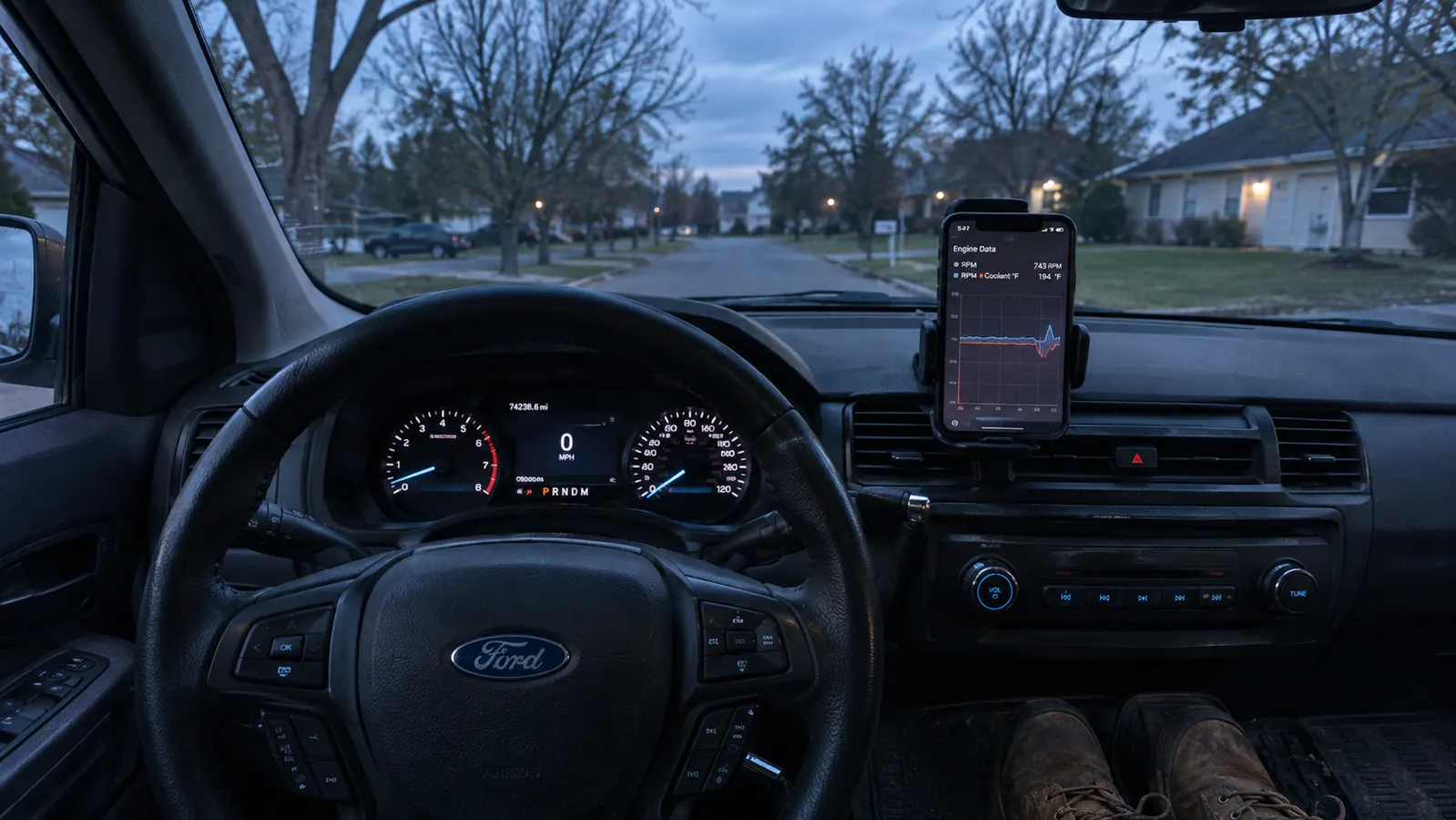
What Neither Scanner Will Do
Neither tool fixes anything, and neither one diagnoses for you. A code is a symptom the computer could see, not a parts order. An oxygen sensor code can be a dying sensor, a vacuum leak, or an exhaust leak upstream of it. A misfire code can be a plug, a coil, an injector, or a compression problem. The scanner tells you which cylinder and how often. Turning that into a repair is still your job, and it is the part that separates a hobbyist who fixes things from one who replaces parts until the light goes out.
Neither one replaces basic testing either, and no scan tool ever will. A vacuum gauge, a compression test, a look at the plugs, a listen under the hood while it idles: all of that still earns its place. And before you slide under a vehicle to chase any of this, get it up on stands, not on the jack, and keep loose clothing away from a running engine. I have seen a fan grab a shirt tail, and I do not need to see it a second time.
Who Should Buy Which
Buy the BlueDriver if you are the one doing the work. When the code is a starting point rather than an answer, live data and system coverage are what turn a light into a repair plan. That goes double for anything with ABS or airbag faults, and double again for a vehicle old enough to have a list of small things going wrong at once. A Tacoma at 168,000 miles is exactly that vehicle. So is a 1991 Miata with a twenty-year accumulation of previous owners' decisions in the wiring. That is why the adapter lives in my console instead of in the top drawer of the tool chest, where a reader would only come out twice a year.
Buy the Ancel AD310 if you want an answer and not a project. If a light comes on, you want to know what it means, you clear it if the fault was minor, and you get on with your week, the handheld does the entire job in about a minute and never asks you to install anything. It is also the better tool to leave in the glovebox of a car that gets shared around, because there is nothing to explain and nothing to pair.
If you genuinely cannot decide, ask yourself one question: when the light comes on, do you call somebody, or do you open the hood? Call somebody and buy the handheld. Open the hood and buy the scanner that shows you live data, and read the freeze frame before you read the forum thread. Both tools are honest. They just answer different questions, and only one of them answers yours.
One scanner, the whole picture, the next time that light comes on
Reads and clears more codes than a basic reader, streams live data while you drive, and covers ABS, SRS and TPMS through the app. No subscription, plus a 180-day money back guarantee.
Amazon See Current Price on Amazon →