Here is the short answer. The EPAuto 1/2-inch drive click torque wrench covers the range that most home brake, wheel and suspension work actually calls for, it clicks at the value you set, and it costs less than the wrench it gets compared to most often. What you give up is paperwork. EPAuto does not put a calibration certificate in the box and does not advertise a lifetime warranty. If either of those matters to you more than the savings, the LEXIVON 1/2-inch drive is the better buy, and I will not argue the point.
I am Curtis. I do my wrenching in a one-and-a-half-car garage in Sacramento, mostly on a 2012 Toyota Tacoma with about 168,000 miles on it and a 1991 Miata that has spent more time on jack stands than on the road. My dad taught me brakes and oil changes when I was a teenager, and the one rule that stuck was that every fastener has a correct tightness and your forearm is not a measuring instrument. Both of these wrenches have been on my bench. What follows is the honest split, including the two places where the cheaper one genuinely loses.
| EPAuto 1/2-Inch Drive | LEXIVON 1/2-Inch Drive | |
|---|---|---|
| Cost positioning | Sits at the lower end of the click-wrench shelf | Costs more, and the difference buys documentation |
| Torque range | 10 to 150 ft-lb (13.6 to 203.5 N/m) | 10 to 150 ft-lb |
| Stated accuracy | Pre-calibrated to plus or minus 4 percent | Advertised at plus or minus 4 percent and ships with a calibration certificate |
| What is in the case | Wrench, 5-inch extension bar, sturdy plastic storage case | Wrench and a hard storage case |
| Material and finish | Chrome vanadium steel with a satin finish | Chrome vanadium steel |
| Size and weight | 16.25 inches, 3.5 pounds | Comparable length and weight |
| Warranty | Standard limited coverage, no published lifetime warranty | Marketed with a lifetime warranty, terms on the brand's own listing |
| Best for | The home mechanic who wants a sound tool that lives in a case | The buyer who wants a certificate and long coverage on the shelf |
Where EPAuto Wins
The first advantage is money, and I will not pretend it is more complicated than that. EPAuto sits near the bottom of the click-wrench shelf while making the same accuracy claim as the wrench above it, pre-calibrated to plus or minus 4 percent. For a tool that lives in a plastic case and comes out four or five weekends a year, that is the right trade. I torque lug nuts, caliper brackets and the small stuff on the Miata, and a wrench that reaches the number without asking me to spend like a shop is the one that stays in the garage instead of on a wish list.
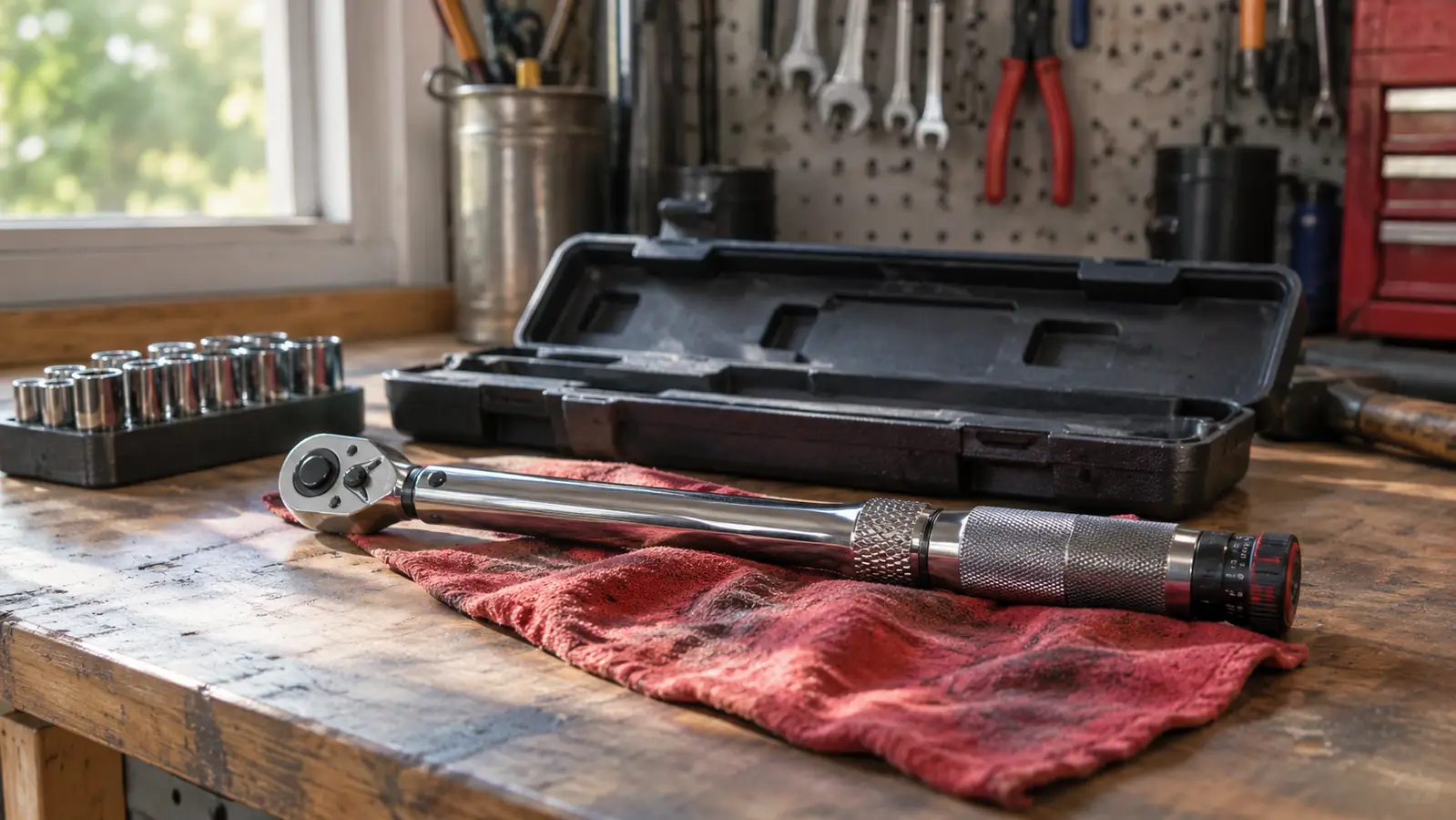
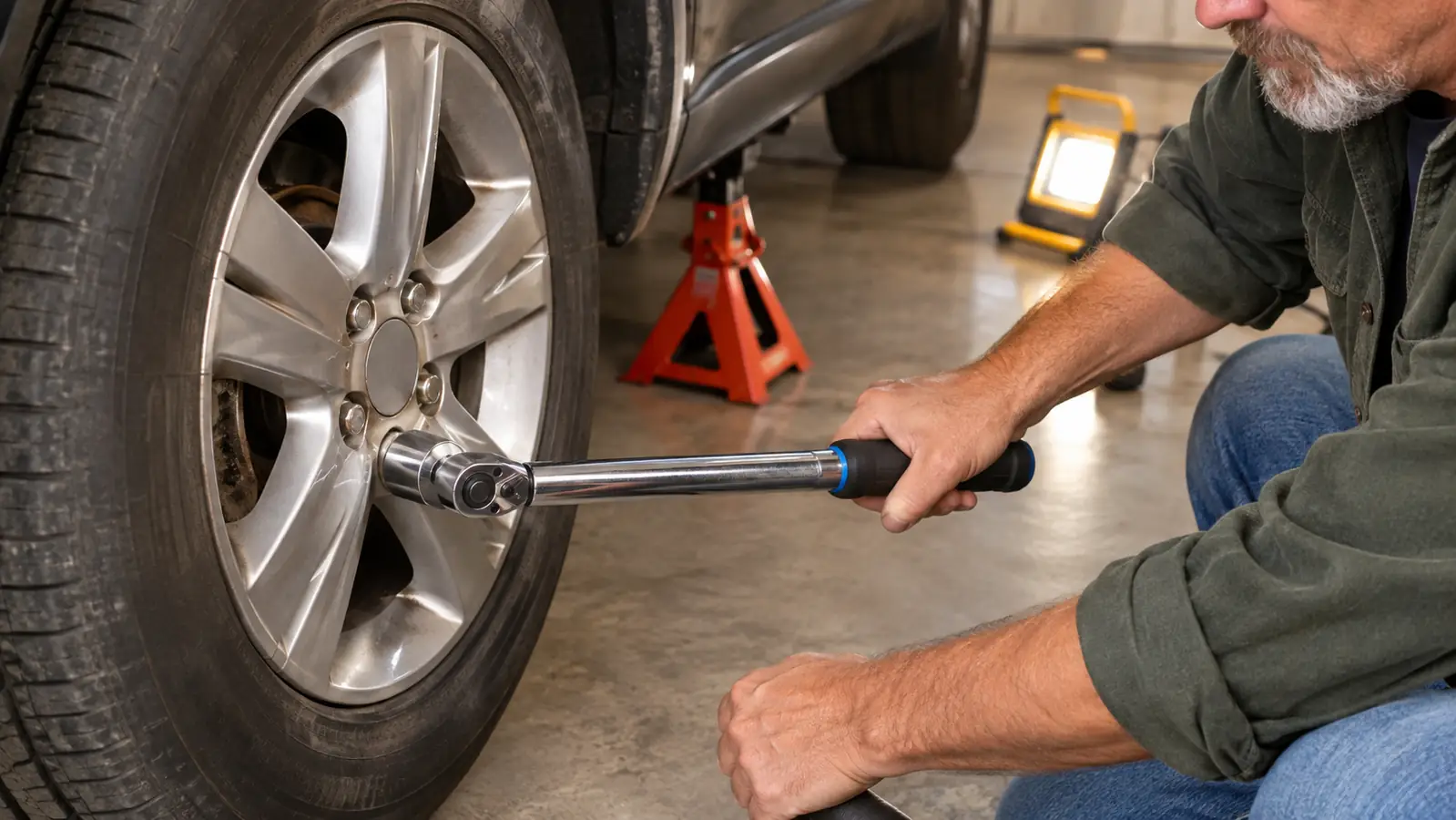
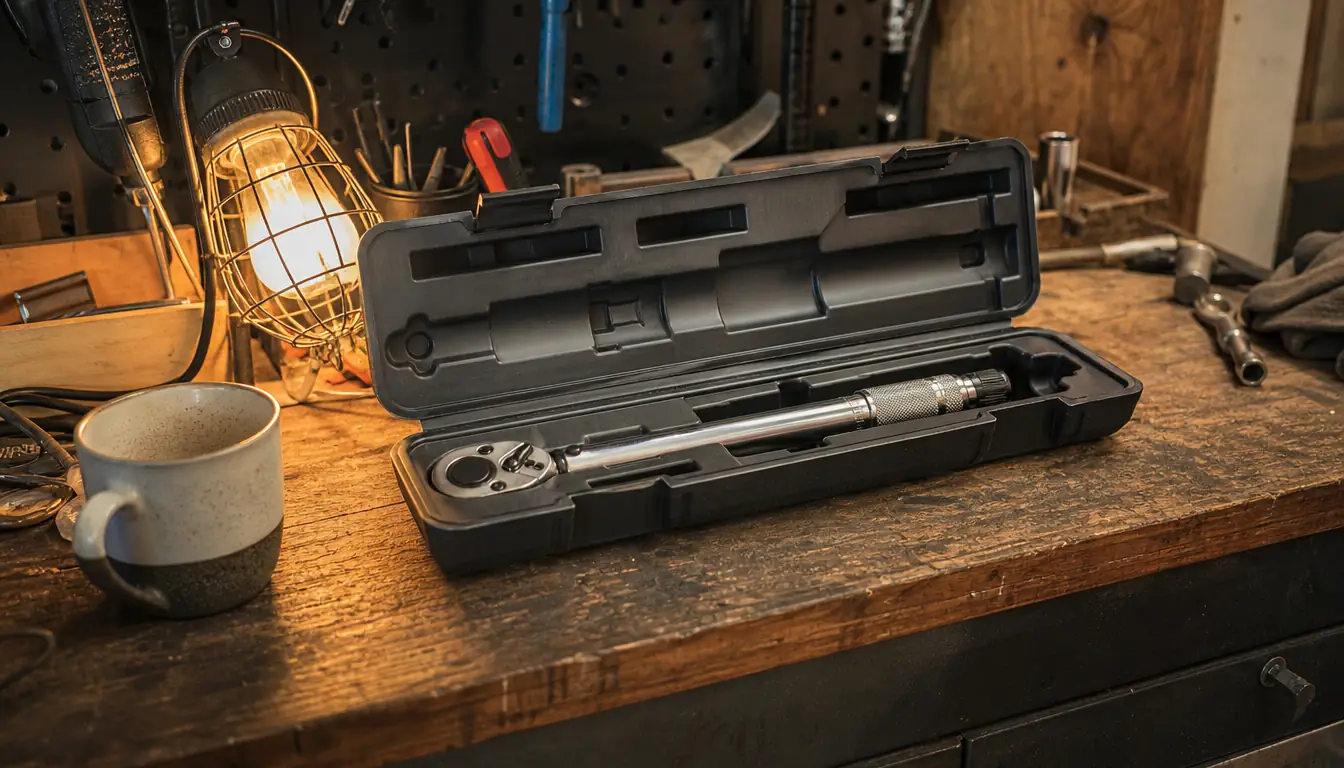
The second advantage is what comes with it. EPAuto includes a 5-inch extension bar and a sturdy plastic storage case. That extension earns its place the first time you torque a lug nut on an alloy wheel with a deep recessed seat, because a 1/2-inch head and socket can bottom out before the socket ever reaches the nut. The wrench itself is chrome vanadium steel, 16.25 inches long and 3.5 pounds, with a satin finish that handles the damp air a garage collects overnight. Sixteen and a quarter inches is enough length to lean on a stubborn bracket without the flex you feel in a short bar.
Small fasteners are the third advantage, and it is the one nobody puts in a review. The scale on this wrench starts at 10 ft-lb rather than 20, and a lot of the bolts a hobbyist actually touches live down near the bottom of that range: valve cover bolts, thermostat housing bolts, the little fasteners that hold a splash shield on. A wrench that cannot honestly read down there sends you back to the ratchet and a firm wrist, which is not a measurement. I learned that the hard way on the first valve cover gasket I ever replaced, back when I was seventeen and working next to my dad. I snugged it by feel, squeezed the gasket out of shape, and it seeped oil within a month. That leak was the reason I started caring about a scale at all.
Where LEXIVON Wins
The first place LEXIVON wins is the piece of paper. Its wrench ships with a calibration certificate in the case, a printed record that the individual tool was checked against a reference before it went in the box. The EPAuto accuracy claim is a factory claim covering the model line, not a document tied to the specific wrench in your hand. For most of us that difference is academic. For the guy torquing cylinder head bolts, or doing side work for neighbors and wanting a record if something strips, it is not academic at all.
The second place is warranty. LEXIVON markets a lifetime warranty on the wrench, and the terms live on the brand's own listing, so read them there rather than trusting a blog post. EPAuto's coverage is the standard limited arrangement you get with most tools at its level. If you are the type who has never used a warranty in your life, this paragraph is not for you. If you are the type who keeps receipts in a folder, the difference in cost starts to look reasonable.
Here is the honest version of how that plays out in a real garage. A neighbor asked me to do the front brakes on his truck last spring, and I did the job with my own wrench, no certificate, no invoice, no handshake beyond the one at the start. Nothing went sideways. But if a caliper bolt had stripped on his truck instead of on mine, that conversation about who pays for the repair gets a whole lot shorter when there is a document with a serial number in the case. That is the entire value of the paper. It does not make the tool work better. It decides what happens after something goes wrong and the vehicle is not yours.
The one that stays on my bench for brake jobs
10 to 150 ft-lb, pre-calibrated to plus or minus 4 percent, a 5-inch extension bar in the case, and a click you can hear with your head inside a wheel well. The paperwork is the only thing missing.
Amazon Check Today's Price on Amazon →What the Spec Sheet Actually Tells You
The torque range is the number to check first, because it decides what the tool can and cannot do. Ten to 150 ft-lb, which is 13.6 to 203.5 N/m, covers wheel lug nuts, caliper brackets, valve covers and most of what a home mechanic touches on a pickup or a small convertible. The metric side of that spec matters more than people expect. Plenty of import fasteners are printed in newton-meters in the manual, and having both figures on the tool means you are not doing conversion arithmetic in your head while flat on your back under a car with a work light going dim. It does not cover everything. Some driveline fasteners and crank bolts ask for more than 150 ft-lb, and a wrench taken past its top end is a wrench you should not trust afterward. When a job needs more, borrow or rent the bigger bar. That costs less than replacing this one.
The accuracy figure is the second number. Plus or minus 4 percent sounds tight until you do the arithmetic: at 100 ft-lb you can be four foot-pounds high or four low and still be inside spec. That is fine. It is far better than the hand-calibrated guess most of us started with. What it means practically is that you should not chase the last foot-pound, and you should not reuse a torque-to-yield bolt hoping the number repeats.
Length and weight matter more than people expect. At 16.25 inches and 3.5 pounds, this is a bar you can control with one hand while the other holds a socket steady, and it reaches caliper bolts without a cheater pipe. I found that out on a front brake job where the bracket bolts sit tucked behind the wheel arch and a shorter bar drags your knuckles along the fender lip the whole way in. The satin finish on the chrome vanadium steel is a small thing that turns out not to be small in a working garage. A polished handle shows every scratch and gets slick once brake dust is on your palms.
At 100 ft-lb, plus or minus 4 percent is four foot-pounds either way. That is the whole argument for owning one of these instead of trusting your forearm.
What Neither Wrench Will Fix
Two wrenches, one set of habits that decides whether the job comes out right. Threads have to be clean and dry unless the manual says otherwise, because oil changes the friction and the torque value stops meaning what the book says. The wrench gets pulled smoothly to the click, not yanked, and you stop at the click rather than pushing through it to be sure. Then it goes back in the case at the low end of its scale instead of sitting on the bench set at 85 ft-lb for six months.
Two more that cost people real money. A torque wrench is not a breaker bar, and it is not the tool you hand to a friend to loosen a rusted lug. And after a wheel goes back on, recheck the lug nuts after about 50 miles of driving, because they settle and the first pass is not the final answer. Neither the EPAuto nor the LEXIVON will save you from skipping that.
The thing that actually goes wrong with a click wrench is drift, and you will not notice it happening. The wrench still clicks. It just clicks somewhere other than where the scale says it does. If you have a buddy with a wrench you trust, set both to the same value and see which one trips first, which takes about two minutes on a workbench. Shops will often check a wrench against their reference for a small fee, and for a tool you have owned for years that check is worth doing once. Neither wrench in this comparison is exempt from drift, and the one with the certificate is not exempt either. The paper proves the tool read correctly on the day it shipped, not on the morning you reach for it.
Two Things to Check Before You Buy Either
First, open your owner's manual and write down the torque specs for the jobs you actually plan to do. If your list tops out around 100 ft-lb for lug nuts and suspension bolts, the EPAuto range is more than enough and the savings are free money. If you are planning engine work that asks for more than 150 ft-lb, neither of these is the tool you need and you should be shopping in a different part of the catalog entirely.
Second, check your socket set. Both wrenches are 1/2-inch drive, which is the size that matches lug nuts and suspension work, but it will not drive the 3/8-inch sockets a lot of us already own. Budget for an adapter or a set of 1/2-inch sockets before the first job, or you will be making a second trip to the parts store with the truck already on stands.
Who Should Buy Which
Buy the EPAuto if you are the home mechanic I described. A couple of vehicles, brakes and wheels and the occasional suspension part, a garage where the tool lives in its case between jobs, and no interest in paying for a certificate you will file and forget. The extension bar alone saves a trip on the first tire rotation. If you want the longer view of how it holds up, there is a separate long-term write-up on this site that follows the same wrench across a season of jobs. There is also a detailed review of the wrench itself if you want the spec-level breakdown before you commit.
Buy the LEXIVON if the certificate and the warranty are the reason you are shopping, or if you are doing paid work for other people and want documentation behind the number. Neither choice is wrong. What is wrong is doing brake work with a bar and a guess. If you are still deciding whether a torque wrench deserves drawer space at all, there is a piece on this site laying out the reasons a home garage ends up wanting one, plus a short first-person story about the afternoon one of them kept a brake job from going back together wrong.
Start with the wrench that covers the jobs you actually have
10 to 150 ft-lb, plus or minus 4 percent out of the box, a 5-inch extension in the case, and more than 23,000 ratings behind it. Read the listing, check today's price, and put it in the drawer.
Amazon Check Today's Price on Amazon →