The click I trust most in my garage is not the ratchet and it is not the jack. It is the dry little snap of the EPAuto 1/2-inch drive click torque wrench telling me a fastener has just reached the number I set for it. I am 52, I supervise crews at a county water department, and I have been working on my own vehicles in a one-and-a-half-car garage in Sacramento since I was a teenager helping my dad do brakes and oil changes. That click took me about thirty years to appreciate.
For most of my twenties and thirties, my torque spec was my forearm. I would put a box-end wrench on a caliper bolt, pull until it felt snug, and call it done. Then one Saturday I helped a friend with the front brakes on his truck and watched him wince at the sound of a bolt stretching. He had done exactly what I had always done. He had guessed. We spent the rest of that afternoon chasing replacement hardware, and I spent the rest of that month thinking about every fastener I had ever guessed at on my own vehicles.
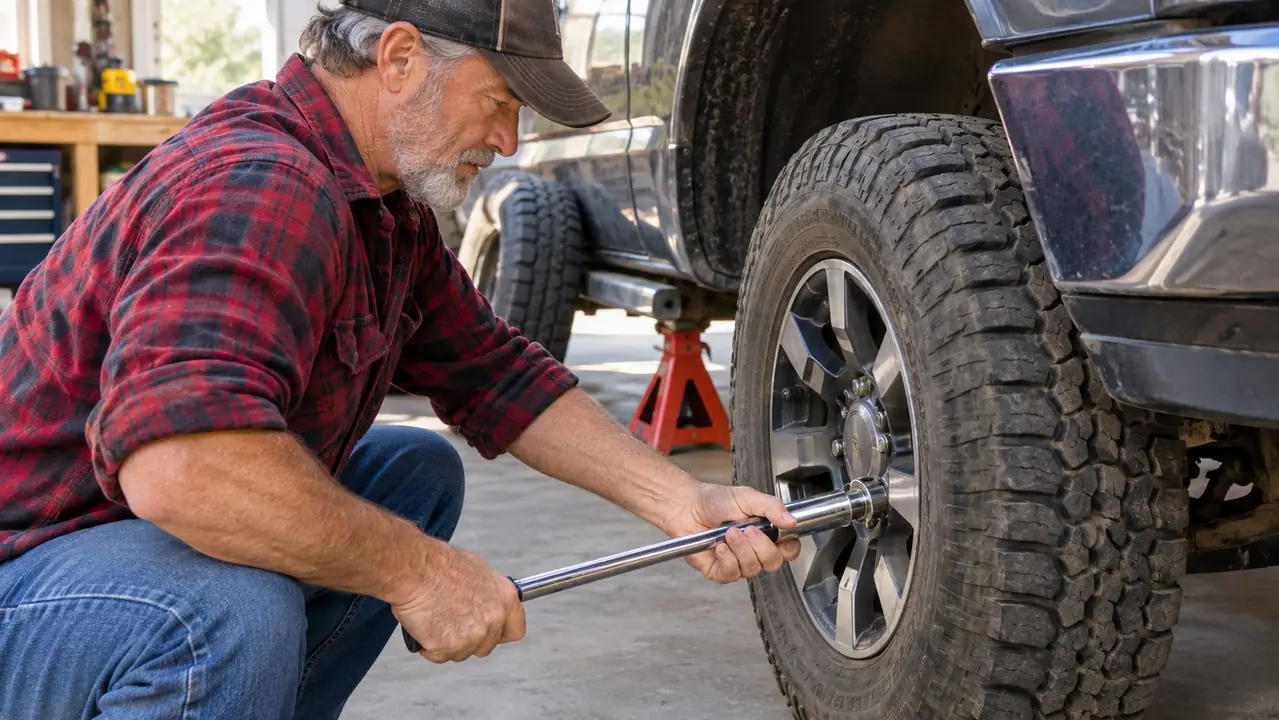
The Tacoma is the one that paid for the lesson. It is a 2012 with about 168,000 miles on it now, and a few years back I had a wheel that kept working loose no matter how hard I leaned on the lug nuts. I had been over-tightening them, which stretches the studs, which is its own slow failure that shows up at the worst possible moment. Nobody taught me that. I learned it from a forum thread written by a retired technician who was very patient with people like me.
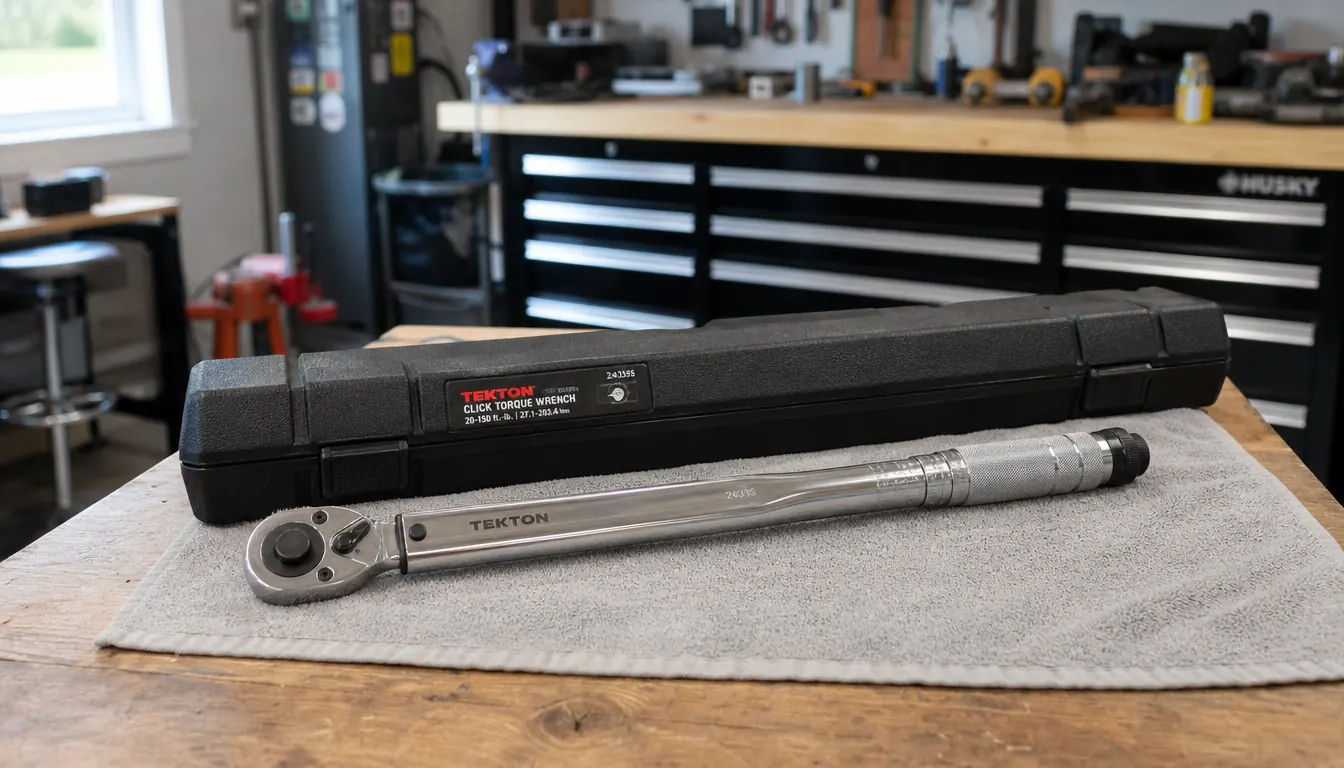
So I bought the EPAuto. It is a 1/2-inch drive click wrench with a range of 10 to 150 ft/lb and a second scale reading 13.6 to 203.5 N/m, which covers everything I do short of axle nuts. It arrived in a hard plastic storage case with a 5-inch extension bar, and the whole thing weighs about 3.5 pounds, so it sits on a lug nut without dragging the wheel out of your hands. The head is chrome vanadium steel with a satin finish.
The first time I used it I honestly thought it was broken. You pull, and nothing happens, and nothing happens, and then the head gives a short flat click you feel in your wrist a split second before you hear it. That is the entire point. You are not judging the torque anymore. You are waiting for the tool to tell you.
Twenty years of guessing at every fastener on two vehicles. The first click from the EPAuto told me more than twenty forum threads did.
Your lug nuts already know you have been guessing
The EPAuto 1/2-inch drive click wrench reads 10 to 150 ft/lb on one scale and 13.6 to 203.5 N/m on the other, ships pre-calibrated to plus or minus 4 percent, and comes in a case with a 5-inch extension bar.
Amazon Check Today's Price on Amazon →Now a tire rotation on the Tacoma is a Saturday morning job instead of an all-day negotiation with myself. I look up the spec, set the wrench to it, and work around the wheel in a star pattern. When the head clicks, I stop pulling. That is the whole discipline. The tool does not make me stronger or faster. It gives me a defined place to stop, and it turns out that stopping in the right place is most of the job.
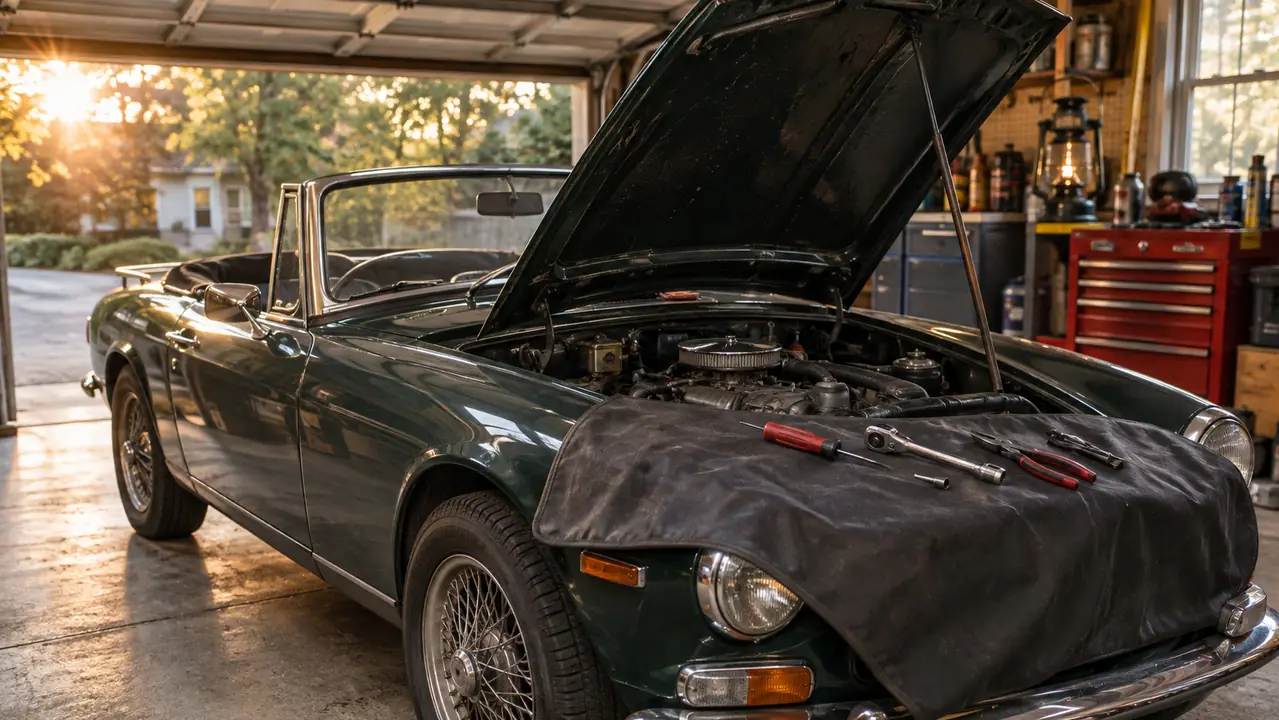
The 1991 Miata taught me the other half of the lesson. Small fasteners threaded into aluminum, valve cover bolts, the little stuff around the intake, all of it goes soft long before it feels tight to a hand used to truck hardware. I set the wrench near the bottom of its range for those and let the click do the judging. On a car that old, a stripped thread can park the whole project for a weekend while you wait on a repair kit.
Here is the honest part. At 3.5 pounds and 16.25 inches long this is a full-size tool, and it feels clumsy in tight spots where a stubby wrench would fit. The click at the low end of the range is quieter than the click at 90 ft/lb, so on a noisy Saturday with the radio going I have missed one and had to walk back around the wheel. I also check mine against a known value once a year, because plus or minus 4 percent is the spec it shipped with and mechanical tools drift. None of that is a knock on the EPAuto. It is what a click wrench is.
The case is the underrated part. Mine lives on the bottom shelf of the rolling tool chest inside its plastic box, next to the 5-inch extension bar that came with it. That extension is what reaches the recessed bolts on a caliper bracket without a wobble adapter stacked on top of it, and keeping it in the same box means I am never digging through a drawer hunting for it while a truck sits on jack stands.
What I'd Tell You If We Were Sitting at My Kitchen Table
I would tell you that the torque spec in your manual is not a suggestion and it is not legal decoration. It is the number an engineer picked for that fastener, and every guess you make around it is a small bet with a slow payoff. I would tell you to set your jack stands before you reach for any wrench, because a torque wrench makes you pull harder than you expect to and the click arrives right when your weight is already committed. And I would tell you that most of what I know came from my dad, a paper manual, and being wrong in my own driveway more than once, which is a slow way to learn something this tool makes simple.
If you have been getting by with a four-way and a decent pair of arms, you have not done anything shameful. I did it for two decades. But the first time a lug nut clicks at exactly the number printed in the manual, you will wonder why you waited so long to stop guessing.
One tool, two vehicles, no more guessing
The EPAuto 1/2-inch drive click torque wrench covers 10 to 150 ft/lb, ships pre-calibrated to plus or minus 4 percent, and stores in a hard case with a 5-inch extension bar.
Amazon See It on Amazon →