For a long time I torqued lug nuts the way a lot of people do. By feel. Snug it down with a four-way, then one more grunt for luck. Then I helped a friend change a wheel on the shoulder of Highway 50 east of Sacramento and watched a stud snap clean off while he leaned on it. Nothing dramatic followed. The wheel held, we limped to a shop, and he paid for a hub. But it changed how I read the torque spec in a service manual. A torque wrench stopped being a tool I wanted and became one I needed.
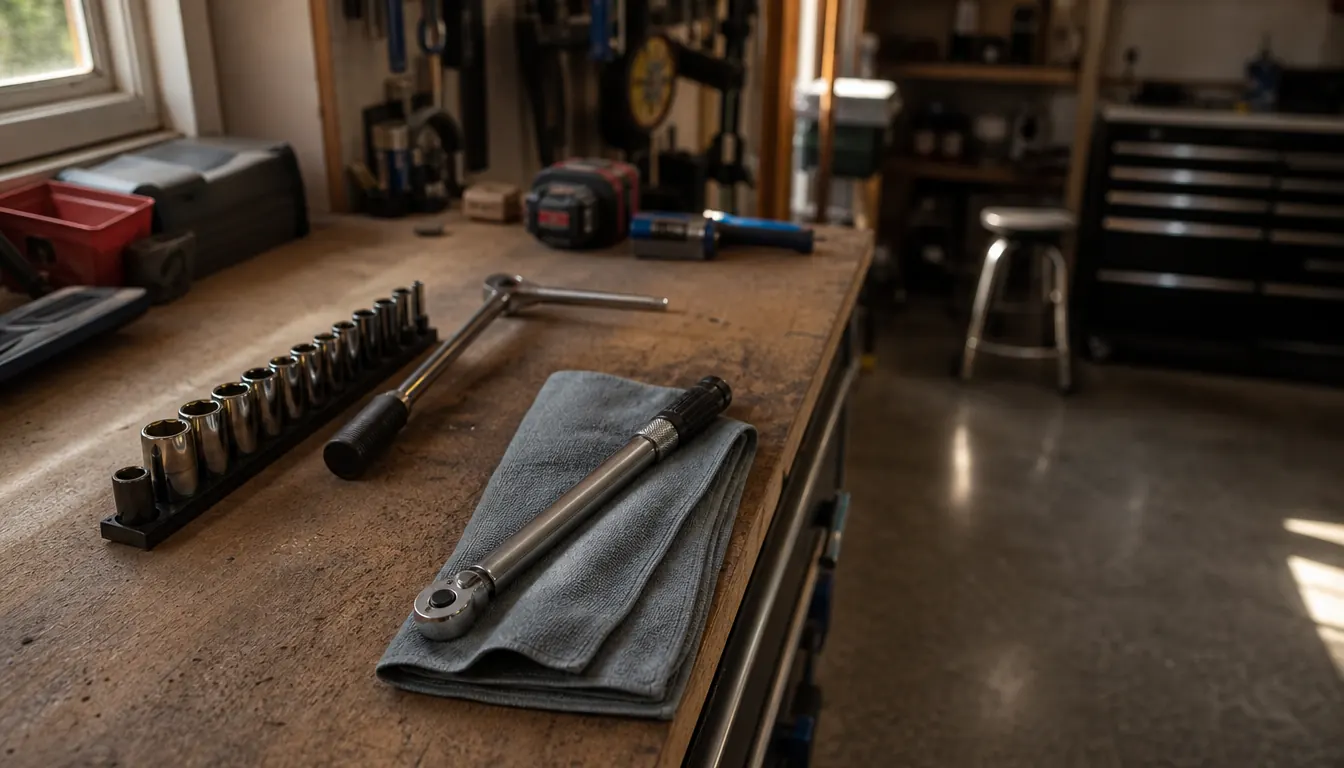
The EPAuto 1/2-inch drive click torque wrench is the one I bought to stop guessing. It covers 10 to 150 ft/lb, which reads as 13.6 to 203.5 N/m on the other scale, and it arrives in a plastic storage case with a five inch extension bar. Mine lives in the top drawer of a rolling chest between a set of impact sockets and a breaker bar. It has been used on a 2012 Tacoma with about 168,000 miles on the odometer and on a 1991 Miata that spends more time on jack stands than on the road. This is not a review that tells you it is flawless. It is the review I wish someone had handed me in the aisle.
Here is the short version. The EPAuto is a predictable wrench for lug nuts, brakes and suspension work. It is not the wrench for every fastener in the garage, and the trouble usually starts when someone pretends it is.
The Quick Verdict
Covers the jobs most home mechanics actually do, with a click that lands where you set it. Runs out of room at the bottom for inch-pound work and at the top for axle nuts.
Amazon Check Today's Price →The number your truck asks for sits in the middle of this wrench
Lug nuts at 83 ft/lb, caliper brackets and sway bar links lower down: all of it lives between the EPAuto's 10 and 150 ft/lb, with a click you can hear and a case that keeps the head from getting knocked around.
Amazon Check Today's Price on Amazon →What You Actually Get in the Box
A wrench that measures 16.25 inches overall and weighs 3.5 pounds. A five inch extension bar in 1/2-inch drive. A hard plastic case with molded slots for both. The body is chrome vanadium steel with a satin finish, which matters less for looks than for the fact that it does not turn into a mirror that shows every greasy fingerprint. The ratchet head is hardened Cr-V as well. The dual scale reads 10 to 150 in ft/lb on one side and 13.6 to 203.5 in N/m on the other, so nobody has to do conversion math in a driveway.
The accuracy claim is plus or minus 4 percent, pre-calibrated at the factory. There is no certificate in the box and no adjustment a normal person can make. I want to be plain about what that means. It means the wrench should land within four percent of the number you preset, assuming it left healthy and has not been dropped or stored wrong. It does not mean you are holding a calibration lab instrument. For lug nuts and caliper brackets, four percent is well inside the margin the engineers already built in. For engine internals, it is not.
How I've Used It in My Own Garage
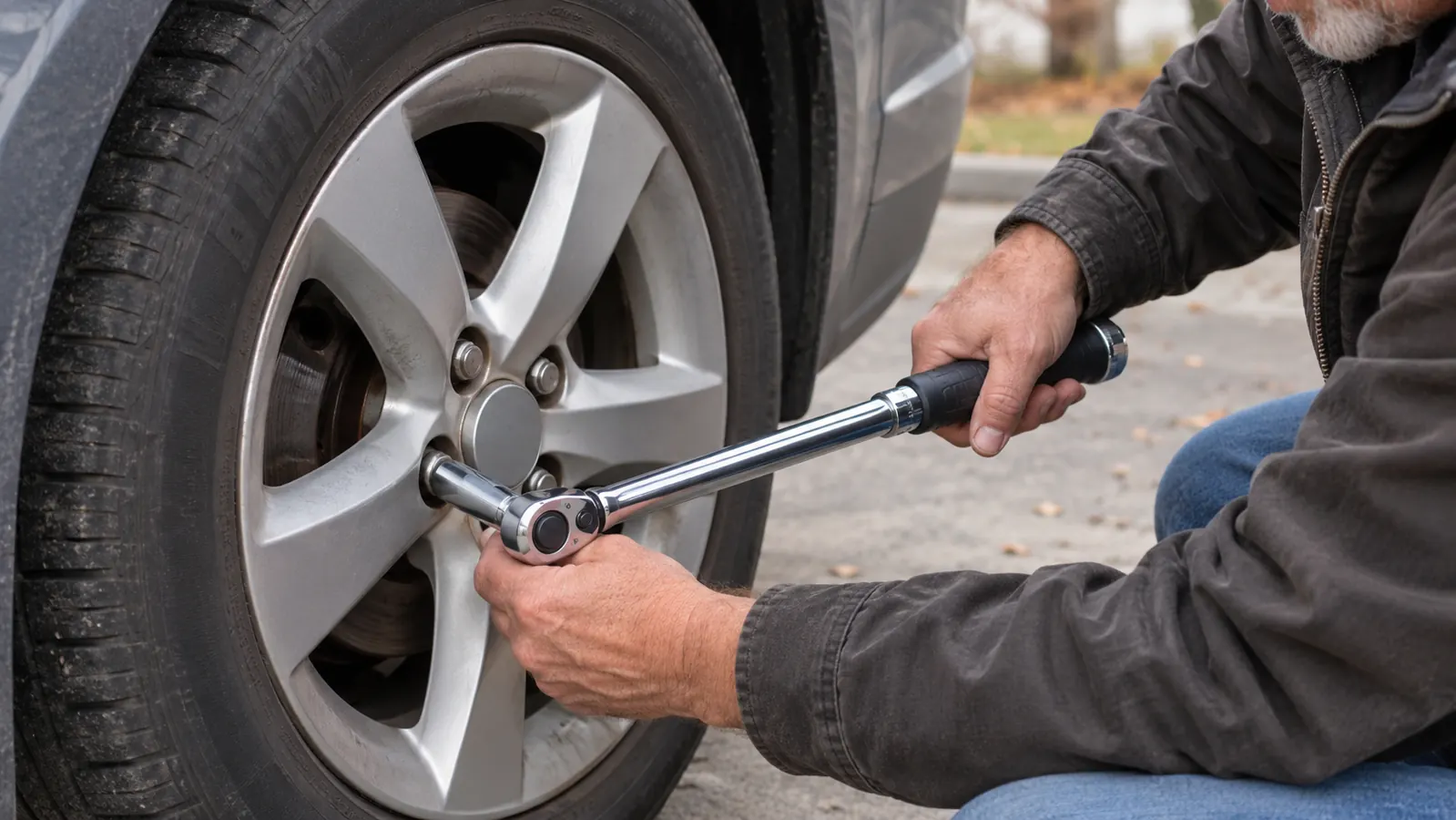
The Tacoma's lug nuts call for 83 ft/lb. That is the job this wrench was bought for and the job it does best. The target sits comfortably inside the range, the click is clear on a quiet driveway, and rotating the tires including the spare takes about twenty minutes. I preset the number, I look at the number a second time because I have misread a setting before, then I pull smoothly until it clicks and I stop. What I do not do anymore is add a little extra after the click. The click is the number.
On the Miata I have used it for brake caliper bracket bolts, sway bar end links, and the bolts that hold the seat rails down. All of those land in the 30 to 60 ft/lb part of the scale, and all of them are places where a bolt that feels snug is either loose or stretched. The wrench has been dropped on the concrete twice, and it still clicks where it should, which I check by doing one lug nut and then comparing the result on a beam wrench.
One Saturday last November I did pads and rotors on the Tacoma, all four corners, in a garage that never got above fifty degrees. Caliper bracket bolts at 45 ft/lb, the slide pins by hand, then the wheels back on at 83. I set the wrench, clicked each bolt, wound it back down between corners and laid it in the case. Four hours in, my hands were cold enough that I had stopped trusting my feel on a ratchet, and that is exactly the situation where a click earns its keep. It decides for you, and it decides the same way every time.
The first time I used it I made a beginner mistake worth repeating here. I had the extension bar on for everything, because it was in the case and it looked useful. An extension adds a little flex and a little lost motion, and on a low-value fastener it can make the click feel mushy. Use the extension when you need the reach. Leave it in the case when you do not. That is not a flaw in the wrench. It is how extensions work.
The Tacoma's lug nuts want 83 ft/lb. That number sits in the middle of the EPAuto's range, which is exactly where I want a click wrench working, not out at the edge of what it claims.
What Nobody Tells You Before You Buy
Most torque wrench write-ups list the range and the accuracy figure and stop there. The things that decide whether you actually like the tool are smaller and less flattering. After a couple of years of Saturdays with the EPAuto, these are the five I would tell a friend first.
The click is easier to miss than you expect
In a quiet garage the click is obvious. In a garage with a compressor cycling, a radio on and a fan running, it is not. A click wrench gives you one brief signal, and if you are watching the bolt instead of listening for it, you can pull straight past the number and never know. I have done it. The fix is boring. Turn the radio down, pull slowly, and stop the instant you hear it or feel it through the handle. The EPAuto will not save you from your own inattention, and no click wrench will.
That is not a knock on EPAuto. It is how this style of wrench works, and it is why I do a slow second pass on anything I care about rather than trusting my memory of the last ten minutes.
Ten foot-pounds is a floor, not a suggestion
The bottom of the range is 10 ft/lb, which sounds like it covers small fasteners until you do the conversion. Ten ft/lb is 120 in/lb. Valve cover bolts and plenty of the small hardware on the Miata are specified in inch-pounds, often well under 120. That work wants a different tool, an inch-pound wrench, and using this one down at its floor to avoid a second purchase is the kind of shortcut that strips aluminum threads. I bought the small wrench after the second time I caught myself considering it.
Before I bought the small wrench I tried to make this one work down at the bottom of its scale. I set it to 10 ft/lb on the Miata's valve cover, clicked one bolt, and knew immediately I was guessing, because the service manual asked for a number in inch-pounds that this wrench cannot express at all. I stopped, left the cover alone, and ordered the inch-pound wrench that week. The bolt I had already clicked came back out and went back in with the right tool. No harm done, but only because I quit early instead of finishing the sequence.
The same caution applies at the bottom of any click wrench's claimed accuracy. A plus or minus 4 percent figure is a claim about the tool, not a promise about every point on the scale. When a fastener is up against the edge of the range, I use a different tool or I ask whether the job is worth doing myself.
One hundred fifty foot-pounds does not cover the whole truck
Lug nuts and most suspension bolts live well under 150 ft/lb. Axle nuts do not. The front axle nut on a Tacoma is specified far above what this wrench will read, and the crank bolt on the Miata is in the same territory. When you meet one of those, you want a breaker bar to loosen it and a wrench with a longer scale to tighten it. Discovering that on a Sunday afternoon is a common story, and it is not the wrench's fault. It is a range decision you make before you buy.
For what it is worth, I think most home mechanics should own the 10 to 150 range first and borrow or rent anything bigger. The number of driveway jobs above 150 ft/lb is small, and getting there means a much heavier and much longer tool that is clumsier on the work you do every month.
You have to wind it back down before it goes in the case
A click wrench stores at the bottom of its range, not at the setting you last used. Leave it wound up at 83 ft/lb for a year and the spring inside takes a set, and the wrench starts clicking late. Mine goes back to the lowest setting, 10 ft/lb, before the case latch closes, every time. It takes four seconds. Losing that habit is the most common reason a click wrench goes bad, and it has nothing to do with the brand on the handle.
Sixteen inches is a lot of wrench in a tight wheel well
At 16.25 inches long, this is not a compact tool. On lug nuts the length is your friend, because it is your lever. On a caliper bracket bolt tucked inside a wheel well, it means you plan the swing before you commit, and sometimes you add the five inch extension just to get the head where it needs to be. There were two jobs on the Miata where I raised the car another notch on the jack stands purely to make room. Plan for that. It is a normal tradeoff on a wrench with this much range.
Where the EPAuto Actually Earns Its Place
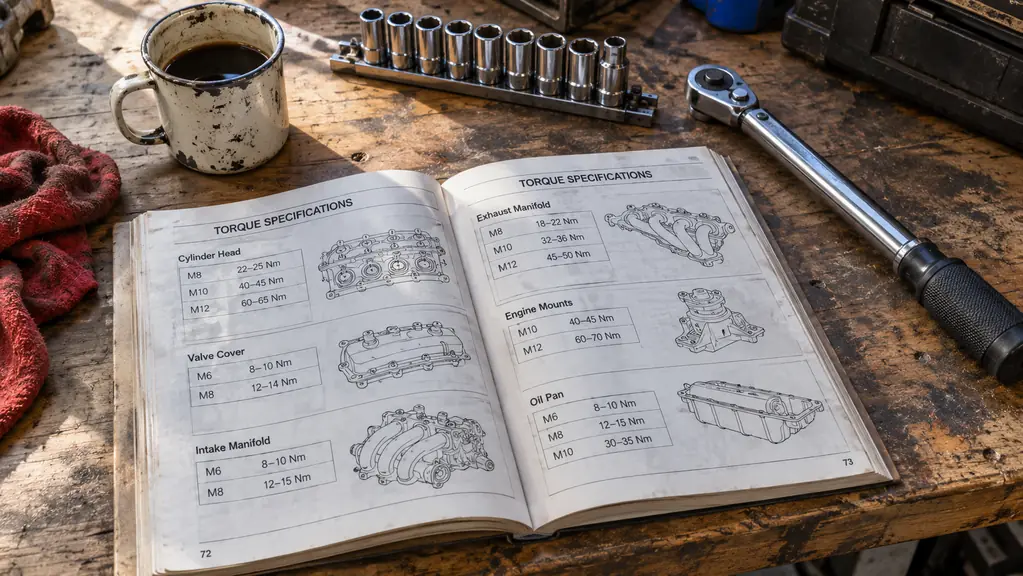
It earns it in the middle of the scale, on the jobs that come around every few months, in a garage where nobody is building a race engine. The satin Cr-V body has survived being dropped and thrown back into a case more than once. The case itself, which sounds like a throwaway detail, is part of why the wrench is still accurate: it holds the head still and keeps the setting from getting knocked around in a drawer. I own nicer tools that live worse.
The drawer it lives in is not a gentle place. Impact sockets, a breaker bar, and a small hammer that has no business being there. After a couple of years of that, one latch on the case has a crack in it and the wrench still reads the same at 83 ft/lb as it did the week I brought it home. That is a small thing to be pleased about, and I am pleased about it anyway, because the alternative is buying the same tool twice.
The honest summary on accuracy goes like this. I have cross-checked this wrench against a beam wrench at 83 ft/lb a handful of times and it has been close enough that I stopped bothering. That is not a calibration certificate and I would not present it as one. It is the level of confidence you need to torque lug nuts, calipers and suspension bolts on a daily driver and then drive to work. If you are building something where a stretched bolt means an engine out, you are shopping in another category and you already know that.
What I Liked
- 10 to 150 ft/lb range covers lug nuts, brake caliper brackets and most suspension bolts on a daily driver
- Click is audible and readable through the handle at the settings home jobs actually use
- Satin chrome vanadium body and hardened ratchet head have survived real drops on concrete
- Plastic case holds the head still and protects the setting between jobs
- Five inch extension bar included and genuinely useful on caliper bolts
- Dual ft/lb and N/m scale means no conversion math in the driveway
Where It Falls Short
- Bottom of the range stops at 10 ft/lb, so inch-pound fasteners need a second wrench
- Top of the range falls well short of axle nuts and crank bolts
- No certificate in the box and no way to adjust calibration yourself
- 16.25 inches is long for anything tucked inside a wheel well
- A single brief click is easy to miss in a noisy garage
Who This Is For
This is for the person who does their own tire rotations, brake pads and rotors, and the occasional sway bar link, on a vehicle that has to start on Monday. It suits a first torque wrench because the range covers what you meet in your first couple of years and the click teaches you what a torque wrench is supposed to feel like. It suits anyone who has been renting one from a parts store and is tired of the deposit. And it suits a small garage, one and a half cars wide, where one wrench has to cover a pickup and a project car without owning a whole drawer.
If you have never owned a torque wrench and you are standing in front of a wall of them, the decision is simpler than it looks. Write down two numbers before you go shopping: the torque spec for your lug nuts and the spec for your caliper bracket bolts. Both come out of a service manual or a forum thread with a photo of the page. If both fall between 10 and 150 ft/lb, and on nearly every passenger car and light truck they do, this wrench covers the work you will actually be doing on a Saturday.
Who Should Skip It
Skip it if you work on engine internals. Head bolts, rod bolts and main bolts live in a world where the accuracy claim, the torque sequence and the calibration paperwork all matter, and a click wrench without a certificate is not the tool for that job. Skip it if you own a heavy truck or do axle work, because you will spend more time wishing for a longer scale than using the top of this one. And skip it if the fasteners you touch most are inch-pound, because the bottom of this range does not reach them.
There is one more case worth naming, the person who wants a single wrench to do everything and does not want to think about range. That person is better off deciding which jobs they actually do and buying for those. The EPAuto is a good answer to a well-defined question and a frustrating answer to a vague one. If you are weighing it against another click wrench in the same range, including the Lexivon, the differences come down to how the click feels and how the case lives, not to the number printed on the side.
If your torque spec lives between 10 and 150, this is the wrench that meets it
Lug nuts at 83 ft/lb, caliper brackets at 45, end links at 55: all inside the EPAuto's range and all jobs it has already handled in my garage. Store it at the lowest setting and it keeps clicking where it should.
Amazon Check Today's Price on Amazon →